
Why Are My Gums Bleeding? Common Causes and Solutions

If you have ever spat out a little pink after brushing your teeth, you are not alone. Bleeding gums are one of the most common dental concerns we hear about at Mount Royal Dental Centre, and the good news is that they are usually very treatable once you understand what is going on. The less-good news is they are rarely something you should just ignore and hope goes away on its own.
As the take goes on, it is easy to brush it off as nothing. Maybe you brushed a little too hard that morning, or perhaps it has been a while since you flossed properly. But the moment bleeding becomes a regular thing, even something that happens every day without much thought, that is your body trying to warn you.
First let us walk through why your gums might be bleeding, what it could mean for your overall oral health, and what you can actually do about it. Whether this is the first time you have noticed it or it has been going on for a while, this guide will help you make sense of what is happening and what your next steps should be.
Is It Normal for Gums to Bleed?
A little blood when you brush does not always mean disaster, but it is your mouth’s way of telling you something is not right. Healthy gums should not bleed during regular brushing or flossing. When they do, it is a signal worth paying attention to.
Think of it like a warning light on your car’s dashboard. It might be something small, or it might need a proper look from a professional. Either way, ignoring it rarely makes things better.
A lot of people assume that bleeding gums are just a normal part of life, something that comes with getting older or eating certain foods. That is not actually the case. Gum tissue is remarkably resilient when it is healthy. The fact that it bleeds with mild contact is a sign that there is some level of inflammation present, and inflammation almost always has a cause that can be addressed.
The earlier you identify what is going on, the easier it is to treat. That is true whether the issue is simple brushing technique or something that needs professional attention.
The Most Common Reasons Your Gums Are Bleeding
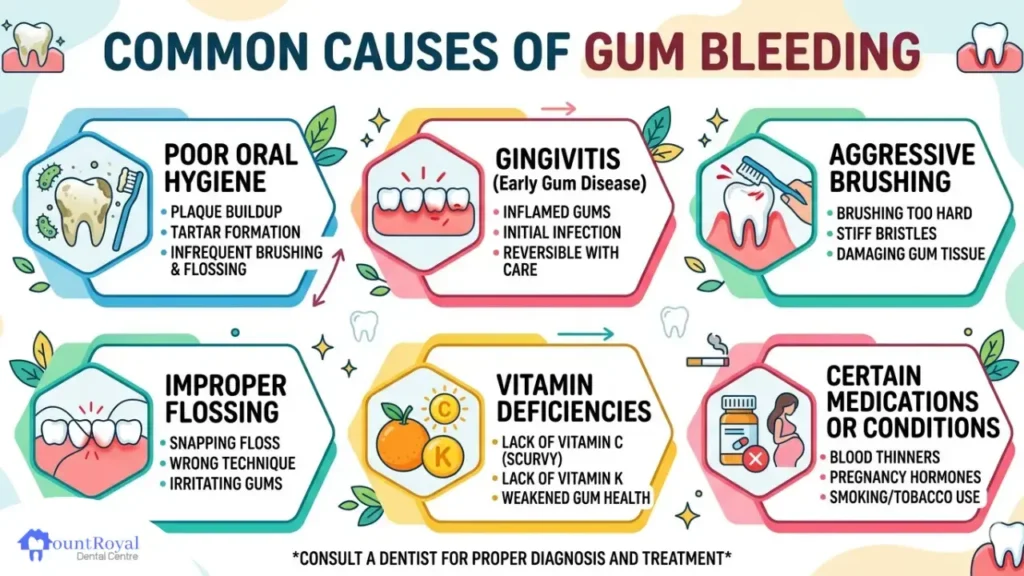
1. Gum Disease (Gingivitis and Periodontitis)
This is, by far, the most frequent cause of bleeding gums. Gingivitis is the early stage of gum disease and happens when plaque builds up along the gum line. Plaque is that sticky film of bacteria that forms on your teeth throughout the day. When it is not removed through regular brushing and flossing, it irritates the gum tissue, causing redness, swelling, and yes, bleeding.
You should not worry about it because gingivitis is completely reversible with proper care. It can be treated with professional cleaning and a better home routine. Many patients are surprised at how much difference even one thorough professional teeth cleaning can make.
The untreated gingivitis can progress into periodontitis, which is a more serious infection that affects the bone and tissue supporting your teeth. At this stage, treatment must be involved precisely. The pockets between your gums and teeth deepen, bacteria gets further below the gum line, and the supporting structures start to break down. This is when people begin noticing their teeth feeling loose or their gums pulling away noticeably from the tooth surface.
Periodontitis is one of the leading causes of tooth loss in adults, and yet it is almost entirely preventable. That is what makes early detection and treatment so important.
2. Brushing Too Hard or Using the Wrong Toothbrush
Every bleeding gum doesn’t mean infection at all. A lot of people assume that brushing harder makes teeth clean and white, but aggressive brushing actually damages gum tissue and causes it to recede and bleed over time.
The bristles on a toothbrush do not need force to be effective. They need the right angle and consistent coverage. When you press down hard, you are not removing more plaque. You are just wearing down enamel and pushing the gums back.
All you need is a soft-bristled toothbrush used with gentle, circular strokes. If your brush looks frayed and worn out within a month or two, that is a pretty reliable sign you are brushing too hard. You can consider using electric toothbrushes, as many models have a pressure sensor that alerts you when you are applying too much force.
3. Flossing After a Long Break
If you have not flossed in a while and then start again, some bleeding in the first few days is pretty normal. Your gums are not used to it and may be mildly inflamed from built-up plaque between the teeth. If you set a routine of daily flossing, it usually settles down within a week or so.
However, if the bleeding doesn’t stop after a week of regular flossing, you shouldn’t ignore it. Ongoing bleeding can be a sign of gum inflammation and should be checked by a dental professional as soon as possible.
It’s also important to pay attention to your flossing technique. Flossing shouldn’t feel like you’re forcing the floss between your teeth or cutting into your gums. Instead, gently guide the floss between each tooth, curve it into a C-shape around the tooth, and slide it slightly below the gum line. Snapping the floss down or using too much force can irritate your gums and lead to bleeding.
4. Hormonal Changes
Hormonal changes can also affect your gum health. During pregnancy, puberty, menstruation, and menopause, gums often become more sensitive and may bleed more easily. A common example is pregnancy gingivitis, where hormonal changes make the gum tissue react more strongly to plaque. As a result, even small amounts of plaque that might not normally cause problems can lead to noticeable redness, swelling, and bleeding.
In most cases, these changes are temporary, but your gum health still needs extra attention during this time. Some people avoid dental visits during pregnancy because they worry treatment may not be safe, but it’s totally. Routine dental care during pregnancy is both safe and important. Keeping your gums healthy can help prevent dental problems and support the overall health of both mother and baby.
If you are going through menopause and noticing changes in your gum tissue, dry mouth, sensitivity, or bleeding, those are all worth discussing with your dentist. Hormonal shifts at this stage of life can affect oral tissues in ways that are not always obvious.
5. Certain Medications
Certain medications can also affect your gum health. Blood thinners, for example, may make your gums bleed more easily. Some blood pressure medications and antidepressants can cause dry mouth, reducing the amount of saliva that helps protect your teeth and gums. When the mouth is dry, bacteria can build up more easily, increasing the risk of gum problems. Other medications, such as certain anticonvulsants and immunosuppressants, may cause the gum tissue to overgrow, creating spaces where bacteria can collect and trigger inflammation and bleeding.
This does not mean you should stop taking your medication. It just means your dentist needs to know about it. If you have started a new medication and noticed a change in your gums, mention it at your next appointment. There may be adjustments to your oral hygiene routine or specific products your dentist can recommend to counteract the side effects.
6. Nutritional Deficiencies
Your diet can also play a role in gum health. Not getting enough vitamin C or vitamin K may make your gums more likely to bleed. Vitamin C helps keep gum tissue strong and healthy by supporting collagen production, which gives your gums their structure. In severe cases, a lack of vitamin C can lead to scurvy, a condition that causes swollen, tender gums that bleed easily. While scurvy is rare today, mild vitamin C deficiencies are more common, especially in people who don’t eat many fruits and vegetables.
Vitamin K is important for normal blood clotting. When your body doesn’t get enough of it, even minor irritation to the gums can result in more bleeding than usual. Foods like spinach, kale, and other leafy greens are excellent sources of both vitamins and can help support healthy gums.
If your diet has been limited lately, or you’ve been dealing with a lot of stress, nutrition could be one of the factors affecting your gum health. A balanced diet plays an important role in maintaining healthy gums and preventing bleeding.
7. Poorly Fitting Dentures or Dental Appliances
If your dentures or mouthguards are not fitted properly, they can rub against gum tissue and cause irritation and bleeding. This is actually a fairly common case, particularly with older dentures that were fitted years ago. As the shape of your jaw and gum tissue changes over time, appliances that once fit well can begin to cause problems.
If you wear any removable dental appliance and are experiencing gum soreness or bleeding around it, bring it to your next appointment so we can check the fit and make adjustments. In most cases this is a straightforward fix, and addressing it early prevents more significant tissue irritation in the future.
8. Stress and Its Impact on Gum Health
This often surprises people, but chronic stress can have a real impact on your oral health. Stress raises cortisol levels in the body, which can weaken your immune response and make it harder to control bacteria in the mouth. When people are under a lot of stress, they may also grind their teeth, skip parts of their oral care routine, eat less healthy foods, or increase habits like smoking or drinking, all of which can further affect gum health.
If you have been going through a particularly demanding stretch at work or at home and noticed your gums starting to bleed more, stress could be a contributing factor.
It’s another reminder that taking a whole-body approach to your health, including regular dental check-ups is especially important during challenging times.”
9. Smoking and Tobacco Use
Smoking is a major risk factor for gum disease, but it can also make the signs harder to notice. It reduces blood flow to the gums, so symptoms like redness and bleeding may not appear as clearly, even when the disease is getting worse underneath. This means the gums may look healthier than they actually are, while damage is still progressing internally.
This is one of the reasons gum disease in smokers is often diagnosed at a later stage. Once someone quits smoking and circulation improves, they sometimes notice more bleeding at first, which can be alarming but is actually a sign that blood flow to the tissue is returning.
If you smoke and are concerned about your gum health, a thorough examination is especially important because the visual clues that dentists typically rely on may not tell the full story.
When Should You See a Dentist?
As a general rule, if your gums are consistently bleeding for more than two weeks, that is your indication to book an appointment. Do not wait to see if it resolves on its own, because in most cases, gum disease does not get better without some intervention. It tends to progress slowly and quietly.
Other signs that cause prompt attention include gums that are swollen, red, or pulling away from your teeth, persistent bad breath that does not go away after brushing, teeth that feel loose or have shifted in position, pain or tenderness along the gum line, and bleeding that happens even when you are not brushing or flossing.
Any one of these on its own is worth mentioning at a check-up. If you are experiencing several of them at once, do not wait for your next routine appointment. Book an appointment as soon as possible.
It is also worth pointing out that gum disease is largely painless in its early and middle stages. Most people have no idea anything is wrong until they come in for a cleaning and we find pockets of infection below the gum line. The absence of pain does not mean the absence of a problem. Regular check-ups and cleanings are important because they help to detect problems early before they become more serious and harder to treat.
How Gum Disease Is Diagnosed
When you come in and mention that your gums have been bleeding, we do not just take a quick look and move on. A proper gum health assessment involves checking the depth of the pockets around each tooth using a small measuring instrument called a periodontal probe. Healthy pockets are generally 1 to 3 millimetres deep. Anything deeper indicates some level of gum disease.
We also look at how the gum tissue looks and feels, whether there is any bone loss visible on your X-rays, how much plaque and tartar have built up below the gum line, and whether there are any areas of recession or exposed root surface. This helps us get a clear understanding of what is happening and whether any treatment is needed.
It takes a bit of time but it is entirely painless, and the information it gives us is valuable for planning the right treatment.
What Treatment Looks Like
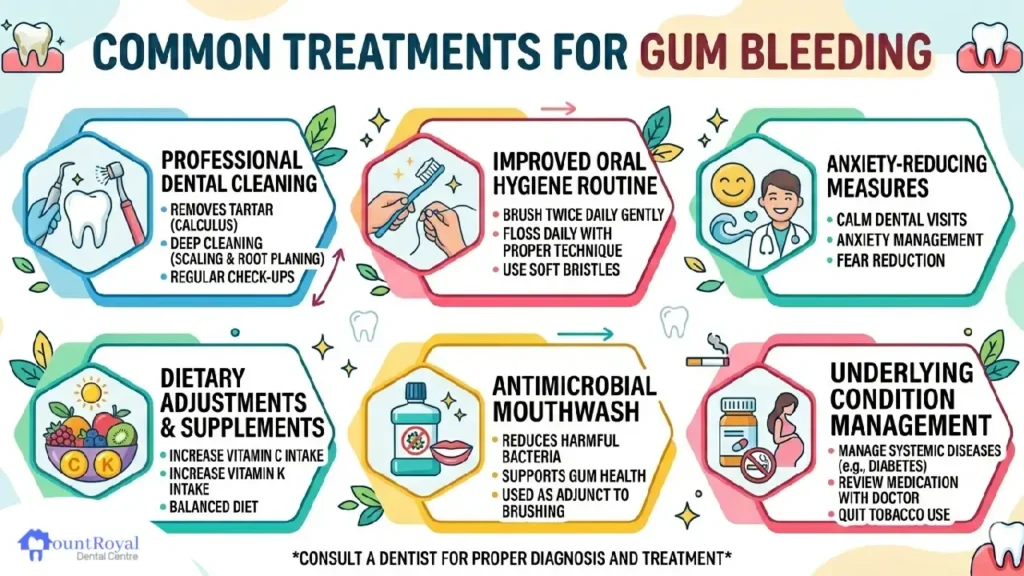
The good news about gum disease is that when it is caught early, treatment is straightforward and very effective. The most common starting point is a professional cleaning called scaling and root planing. This treatment goes deeper than a regular cleaning, removing plaque and tartar from below the gum line and smoothing the root surfaces so bacteria have fewer places to cling.
For mild gingivitis, a standard cleaning along with improvements to your daily oral care is often enough. For more advanced periodontitis, we may recommend a series of deep cleaning appointments, and in some cases a referral to a periodontist for more specialised treatment.
After initial treatment, patients with a history of gum disease are usually advised to come in for maintenance visits every three to four months instead of the usual six. This frequent schedule helps to keep the gums healthy and allows us to catch any signs of recurrence early before they become serious again
In more advanced cases where pockets are very deep or bone loss is significant, surgical options exist that can reshape the gum tissue and regenerate lost support. These are reserved for situations where non-surgical treatment has not been enough, and these treatments are far more effective when pursued sooner rather than later.
What You Can Do at Home Right Now
While a dental visit is the best next step for persistent bleeding, there are things you can do in the meantime to support your gum health and give yourself the best possible fbase before going into any professional treatment.
Brush twice a day using a soft-bristled toothbrush and fluoride toothpaste. Take your time, spending at least two full minutes each session, and be gentle along the gum line. Angle the brush at 45 degrees toward the gum line and use short, circular strokes rather than long horizontal sweeps.
Floss every day. It feels like a burden, especially when it causes a little bleeding, but flossing removes the bacteria and debris that your toothbrush simply cannot reach. Those spaces between your teeth account for about 40 percent of tooth and gum surfaces. Skipping floss means leaving nearly half your mouth uncleaned every day.
Rinse with an antibacterial mouthwash. This helps to reduce the bacterial load in your mouth between brushings. Ask your dentist which formula is appropriate for you, as the right choice can vary depending on your gums problem.
Stay hydrated. Saliva is your mouth is natural defence system. It neutralises acids, washes away food particles, and contains proteins that fight bacteria. Drinking enough water throughout the day keeps it flowing properly. If your mouth feels consistently dry, that is worth mentioning at your next visit.
Eat a diet rich in vitamins and minerals. Leafy greens, citrus fruits, dairy, nuts, and lean proteins all help support healthy gum tissue. At the same time, cutting back on sugar and refined carbohydrates reduces the fuel that bacteria need to cause plaque and gum disease.
Quit smoking if you can. We all know that this one is hard. The benefits of quitting smoking can have a noticeable impact on your gum health sooner than you might expect. Within just a few months, blood flow to the gums improves, your body’s ability to fight infection becomes stronger, and the risk of gum disease worsening decreases significantly.
Manage stress where possible. Try to manage stress in healthy ways whenever you can. Whether it’s staying active, improving your sleep routine, reducing caffeine intake, or reaching out for support during challenging times, small changes can have a positive impact. Since stress affects both your body and your mouth, taking care of your mental well-being can also help protect your gum health.
The Connection Between Gum Health and Your Overall Health
Many people are surprised to learn that gum health can affect far more than just their teeth. Over the past several decades, researchers have found strong links between gum disease and a number of serious health conditions throughout the body.
One of the most widely studied connections is between gum disease and heart health. When gum tissue becomes infected, harmful bacteria and inflammatory substances can enter the bloodstream and travel to other parts of the body. This ongoing inflammation may contribute to cardiovascular problems, and studies have shown that people with periodontitis tend to have a higher risk of heart disease, heart attack, and stroke.
There is also a well-established relationship between gum disease and diabetes. The connection works both ways. People with uncontrolled diabetes are more likely to develop severe gum disease because elevated blood sugar levels can weaken the body’s ability to fight infection. At the same time, chronic gum inflammation can make it more difficult to manage blood sugar levels effectively. For individuals living with diabetes, maintaining healthy gums is an important part of overall disease management.
Gum disease has also been linked to respiratory conditions, including pneumonia. When bacteria from an infected mouth are inhaled into the lungs, particularly in older adults or people with compromised immune systems, it can contribute to serious respiratory infections.
Researchers have also been looking at links between periodontal disease and cognitive decline, adverse pregnancy outcomes, and rheumatoid arthritis, and while the science is still evolving in some of these areas, the pattern is clear. What happens in your mouth does not stay in your mouth.
This is not meant to alarm you. It is meant to reframe the way you think about dental care. Regular gum check-ups and cleanings are not just cosmetic maintenance. They are part of taking your whole-body health seriously.
Gum health affects more than your smile. At Mount Royal Dental Centre, we treat you as a whole person, not just a set of teeth. Meet Our Team and Book Your VisitFrequently Asked Questions
Can stress alone cause my gums to bleed?
My gums only bleed when I floss. Do I still need to see a dentist?
Can bleeding gums heal on their own?
Are bleeding gums more common as you get older?
I am pregnant. Is it safe to get dental treatment for my gums?
A Final Word From Our Team
Bleeding gums are one of those things that people tend to put up with far longer than they should. It feels minor, it does not hurt, and it is easy to tell yourself it will sort itself out. But your gum health has a bigger impact on your overall wellbeing than most people realise, and the earlier a problem is caught, the simpler and more effective the treatment.
At Mount Royal Dental Centre, we have helped countless patients get their gum health back on track, some who came in with early-stage gingivitis and some who waited longer than they wish they had. Whatever stage you are at, we are not here to judge. We are here to help you move forward with a clear plan.
If your gums have been bleeding and you have been putting off getting it looked at, let this be the nudge you needed.
Book Your Appointment at Mount Royal Dental Centre
Our team is welcoming new patients and we would love to help you take care of your smile. Whether you are coming in for a routine check-up, a gum health concern, or anything else, we will make sure you feel informed and at ease throughout every step.
Table of Contents