
7 Signs Your Wisdom Teeth Need to Be Removed
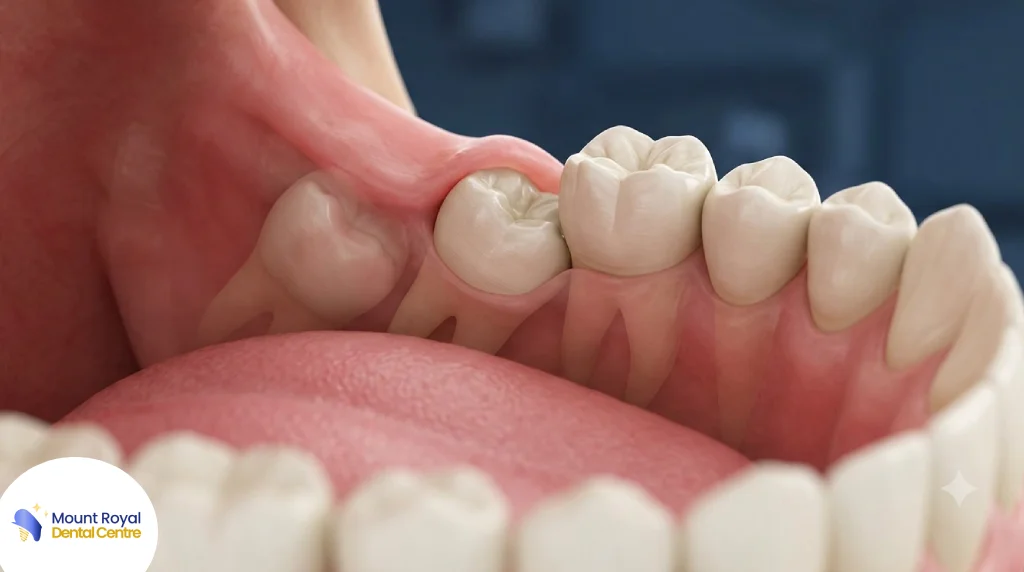
Wisdom teeth usually appear between the ages of 17 and 25, often when you least expect them. Some people never have problems with them, but for many, wisdom teeth can cause pain, swelling, crowding, and even infection if they do not have enough room to grow.
The early signs are often easy to ignore because they start gradually. Knowing what to look for can help you avoid more serious dental problems later. In this guide, we cover seven common signs that your wisdom teeth may need to be removed, so you can get the right treatment before the pain becomes worse.
A Quick Guide to Wisdom Teeth
Wisdom teeth are the last set of molars to develop, usually appearing between the ages of 17 and 25. They grow at the very back of your mouth, and while some people have no problems with them, many don’t have enough space for these teeth to come in properly.
When there isn’t enough room, wisdom teeth can grow at an angle, become trapped beneath the gums (impacted), or press against nearby teeth. These issues can lead to pain, swelling, infection, and other dental problems if left untreated.
Not every wisdom tooth needs to be removed. Some grow in normally and remain healthy for years. The signs below can help you recognize when a wisdom tooth may be causing problems, but only a dental exam and X-rays can determine whether wisdom teeth removal is the best option for your oral health.
1. Persistent Pain at the Back of Your Mouth
One of the first signs of a problem is pain at the back of your mouth. You may notice a dull ache, throbbing, or soreness where your wisdom teeth are coming in. This often happens when there isn’t enough room for the teeth to grow properly or when they become impacted.
The discomfort may come and go at first, but it often becomes more frequent or more painful over time. While the pain may seem manageable, it usually won’t go away on its own. Having your wisdom teeth examined early can help identify the cause and prevent more serious problems, such as infection or damage to nearby teeth.
Dealing with pain at the back of your mouth right now? Book a consultation with our Calgary team and get answers before it worsens.
2. Swollen, tender, or bleeding gums
Swollen or sore gums around your back teeth can be a sign that your wisdom teeth are causing problems. As a wisdom tooth begins to erupt or becomes partially impacted, the surrounding gum tissue can become red, swollen, tender, and may even bleed when you brush or floss.
Partially erupted wisdom teeth are especially difficult to keep clean because food particles and bacteria can become trapped beneath the gum tissue. This increases the risk of inflammation, infection, and discomfort.
If you notice persistent swelling, tenderness, or bleeding around your wisdom teeth, it’s a good idea to schedule a dental exam. Early treatment can help prevent the problem from becoming more painful or leading to a more serious infection.
3. Impacted or partially erupted teeth
An impacted wisdom tooth is one that cannot fully break through the gum, often because it is blocked by other teeth or growing at an angle. A partially erupted tooth has only come through part of the way. Both situations tend to cause problems.
You may feel pressure, notice a tooth that seems stuck, or see one that has only come in halfway. Impacted teeth are difficult to clean and can affect the healthy teeth beside them, which is one of the most common reasons dentists recommend removal.
4. Crowding or Shifting of Nearby Teeth
Wisdom teeth often don’t have enough room to grow properly. As they try to emerge, they can put pressure on the neighboring teeth, causing your teeth to feel crowded or your bite to feel different.
You may notice that your teeth seem tighter than before or that your smile no longer looks as straight as it once did. While wisdom teeth aren’t always the direct cause of crowding, they can contribute to changes in some cases, especially if they are impacted or growing at an angle.
If you’ve had braces or other orthodontic treatment, it’s a good idea to have your wisdom teeth monitored regularly. A dental exam and X-rays can determine whether your wisdom teeth are affecting the position of your other teeth and whether removal is recommended.
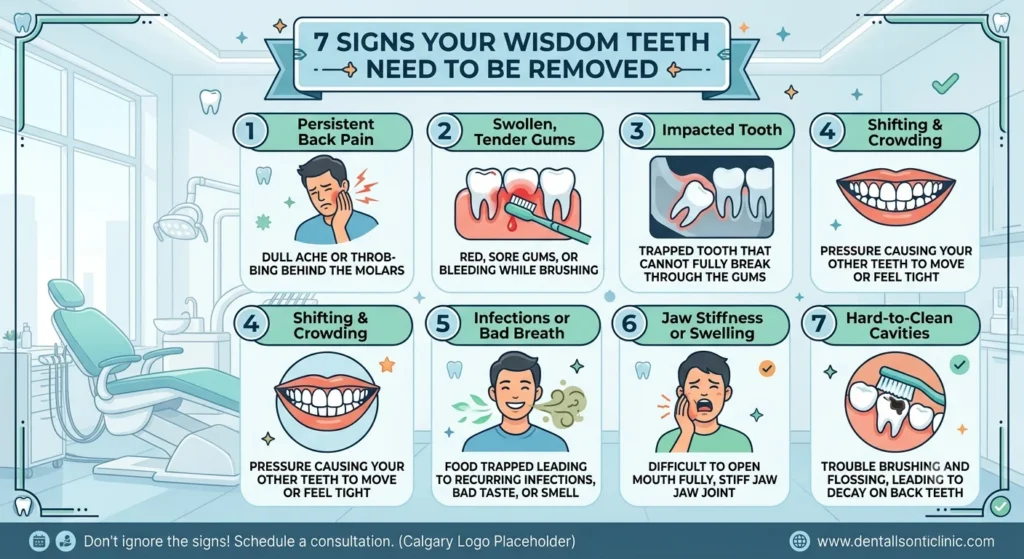
5. Frequent infections, bad breath, or a bad taste
Wisdom teeth are located at the very back of your mouth, making them difficult to clean properly. Food particles and bacteria can easily become trapped around them, especially if the tooth is partially erupted or impacted.
This buildup can lead to repeated infections, persistent bad breath, or a bad taste in your mouth that doesn’t go away even after brushing and flossing. You may also notice swelling, tenderness, or discomfort around the affected area.
If you’re experiencing recurring infections or ongoing bad breath around your wisdom teeth, it’s important to have them evaluated by a dentist. Treating the problem early can help prevent the infection from spreading and protect your overall oral health.
Noticing repeated infections or swelling? Do not wait it out. Contact our Calgary team and we will help you get relief quickly.
6. Jaw Stiffness, Swelling, or Difficulty Opening Your Mouth
Problems with your wisdom teeth can affect more than just your gums. As pressure and inflammation increase, you may notice jaw stiffness, swelling, or difficulty opening your mouth fully.
These symptoms can make everyday activities like eating, speaking, and chewing uncomfortable. If jaw pain or stiffness occurs along with pain at the back of your mouth, it could be a sign of an impacted or infected wisdom tooth that needs professional evaluation.
7. Cavities or decay in hard-to-reach back teeth
Even when a wisdom tooth comes in, its position makes it very difficult to clean thoroughly. That leaves it vulnerable to cavities and decay, and it can put the tooth directly in front of it at risk too.
If your dentist keeps finding decay in that back corner during your routine dental exam, removal may be the more sensible long-term choice. Protecting the healthy teeth around a troublesome wisdom tooth is often worth more than saving the wisdom tooth itself.
What happens if you ignore the signs
Ignoring a problematic wisdom tooth usually doesn’t make the problem go away. Over time, an untreated tooth can lead to spreading infection, damage to neighbouring teeth, cysts that affect the jawbone, and pain that becomes harder to manage.
The good news is that catching these issues early makes treatment simpler and recovery smoother. A quick assessment now can save you from an urgent, painful situation later. If severe pain or swelling ever hits suddenly, our emergency dental treatment is here to help you find fast relief.
The earlier a wisdom tooth problem is diagnosed, the easier it is to treat. A simple dental exam and X-rays can identify the issue before it becomes a painful dental emergency. If you’re experiencing severe pain, swelling, or signs of infection, our emergency dental treatment can help prevent further complications and provide lasting relief.
Do All Wisdom Teeth Need to Be Removed?
No. Not everyone needs their wisdom teeth removed.
If your wisdom teeth are healthy, fully erupted, growing in the correct position, and easy to keep clean, they may never need to be removed. Many people keep their wisdom teeth for life without experiencing any problems.
The decision depends on your individual oral health. During a dental exam, your dentist will evaluate your wisdom teeth and use dental X-rays to see how they’re positioned beneath the gums. Based on what they find, they’ll recommend whether monitoring or wisdom teeth removal is the best option.
The goal isn’t to remove wisdom teeth unnecessarily—it’s to prevent future problems and help you maintain a healthy, pain-free smile.
What to expect at your consultation
A wisdom teeth consultation is straightforward and nothing to fear. Your dentist will examine your mouth, take X-rays to see the position of the teeth and their roots, and talk through what they find with you.
From there, you will get a clear recommendation, whether that is keeping an eye on things, keeping up with regular professional cleaning, or planning a removal. You will have the chance to ask questions and understand your options before anything is decided.
What to Expect During Your Wisdom Teeth Consultation
A wisdom teeth consultation is a simple, comfortable visit designed to assess your oral health and determine whether your wisdom teeth need treatment.
During your appointment, your dentist will examine your teeth and gums, review your symptoms, and take dental X-rays to check the position of your wisdom teeth and their roots. This helps identify problems that may not be visible during a regular exam, such as impacted teeth or hidden infections.
After the examination, your dentist will explain the findings, answer your questions, and recommend the best next steps. Depending on your situation, this may include monitoring your wisdom teeth, scheduling regular dental checkups and professional cleaning, or planning a removal.
The goal is to give you clear information and personalized advice, so you can make an informed decision about your oral health with confidence.
Frequently Asked Question
Does wisdom teeth removal hurt?
Can I leave my wisdom teeth alone if they do not hurt?
How long is the recovery?
How long does the procedure itself take?
Can all four wisdom teeth be removed at once?
What can I eat after wisdom teeth removal?
Is swelling after the procedure normal?
What is dry socket, and how do I avoid it?
Can wisdom teeth cause headaches or ear pain?
Do I need a referral to have my wisdom teeth assessed?
Do not wait on wisdom tooth pain
Wisdom teeth problems tend to grow slowly and then flare up all at once, usually at the worst possible moment. Recognizing the signs early puts you in control, so you can get an assessment and address any issue before it becomes urgent.
At Mount Royal Dental Centre in Calgary, our friendly team will take a careful look, explain exactly what is going on, and help you decide on the right next step with zero pressure. Whether your wisdom teeth need removal or simply need watching, you will leave with clear answers.
Table of Contents