
Clear Aligners vs Traditional Braces: Which Is Better for Adults?
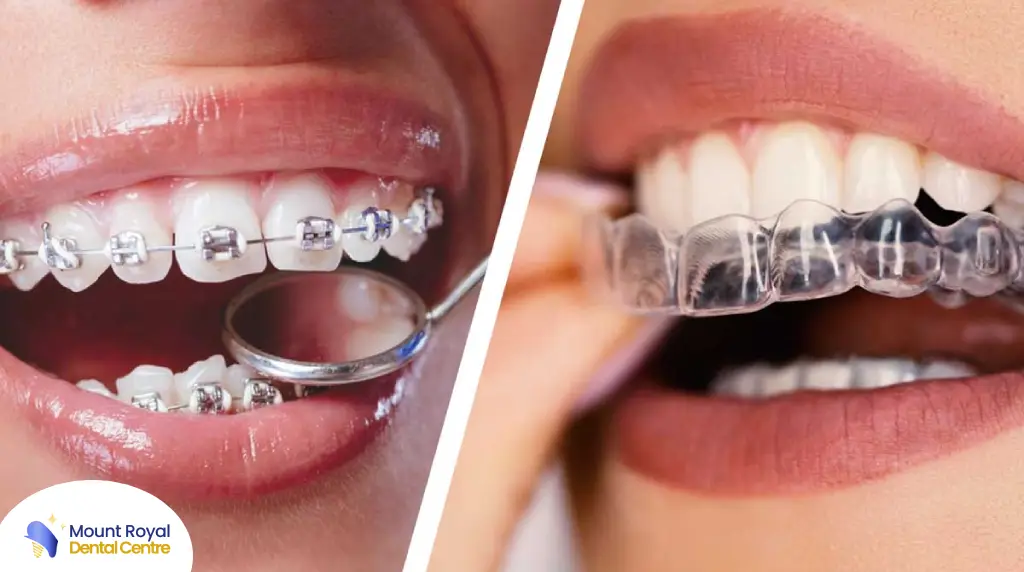
Many adults spend years wishing they had straighter teeth but assume orthodontic treatment is only for teenagers. Today, that’s no longer the case. More adults than ever are choosing to improve their smiles, not just for cosmetic reasons but also to support better oral health and function.
One of the biggest questions patients ask before beginning treatment is:
Should I choose clear aligners or traditional braces?
Both options are effective at straightening teeth, correcting bite issues, and improving overall oral health. However, they differ in appearance, comfort, maintenance, treatment complexity, and lifestyle impact. The right choice depends on your unique dental needs, daily habits, and treatment goals.
In this guide, we’ll compare clear aligners vs traditional braces in detail, explaining how each treatment works, their advantages and limitations, and how to determine which option is best for you. By the end, you’ll have the information you need to make a confident, informed decision during your orthodontic consultation.
Why More Adults Are Choosing Orthodontic Treatment
Orthodontic treatment is no longer just about achieving a more attractive smile. Properly aligned teeth contribute to better oral health and can improve your overall quality of life.
Many adults seek treatment because they experience:
- Crowded teeth that are difficult to clean
- Gaps between teeth
- Crooked teeth affecting confidence
- Bite problems causing uneven tooth wear
- Jaw discomfort from misaligned teeth
- Speech concerns
- Difficulty chewing certain foods
Straight teeth are generally easier to brush and floss, reducing plaque buildup and making it simpler to maintain healthy gums. Correcting bite issues can also help distribute chewing forces more evenly, reducing excessive wear on certain teeth over time.
Whether your goal is improving your appearance, protecting your oral health, or both, orthodontic treatment can be a valuable long-term investment.
What Are Clear Aligners?
Clear aligners are a modern orthodontic treatment that uses a series of custom-made, transparent plastic trays to gradually move teeth into their ideal positions.
Unlike traditional braces, clear aligners do not use metal brackets or wires. Instead, each aligner is precisely designed to apply gentle pressure to specific teeth. As your teeth move, you’ll switch to a new set of aligners every one to two weeks according to your customized treatment plan.
One of the biggest advantages of clear aligners is that they are removable. Patients can take them out when eating, drinking anything other than water, brushing, and flossing, making them a convenient option for many adults.
Because they are nearly invisible, clear aligners have become especially popular among professionals, university students, and adults who prefer a discreet way to straighten their teeth.
How Do Clear Aligners Work?
Treatment begins with a comprehensive dental examination and digital impressions or scans of your teeth.
Your dentist creates a customized treatment plan showing how your teeth will move throughout each stage of treatment. Modern software allows many patients to see a digital preview of their expected results before treatment even begins.
For the best results, clear aligners should generally be worn 20 to 22 hours per day, only removing them for meals and oral hygiene.
Depending on your individual case, treatment may last anywhere from several months to two years.
What Are Traditional Braces?
Traditional braces have been used successfully for decades to correct a wide range of orthodontic problems.
Braces consist of:
- Small brackets attached to each tooth
- An orthodontic wire connecting the brackets
- Elastic bands or clips that hold the wire in place
Over time, controlled pressure from the wire gradually moves teeth into better alignment.
Unlike clear aligners, braces remain fixed to your teeth throughout treatment, which means they work continuously without needing patient compliance beyond maintaining good oral hygiene and attending scheduled appointments.
Today’s braces are much smaller, more comfortable, and more aesthetically pleasing than those used years ago. Some adults also choose ceramic braces, which blend more naturally with the colour of their teeth.
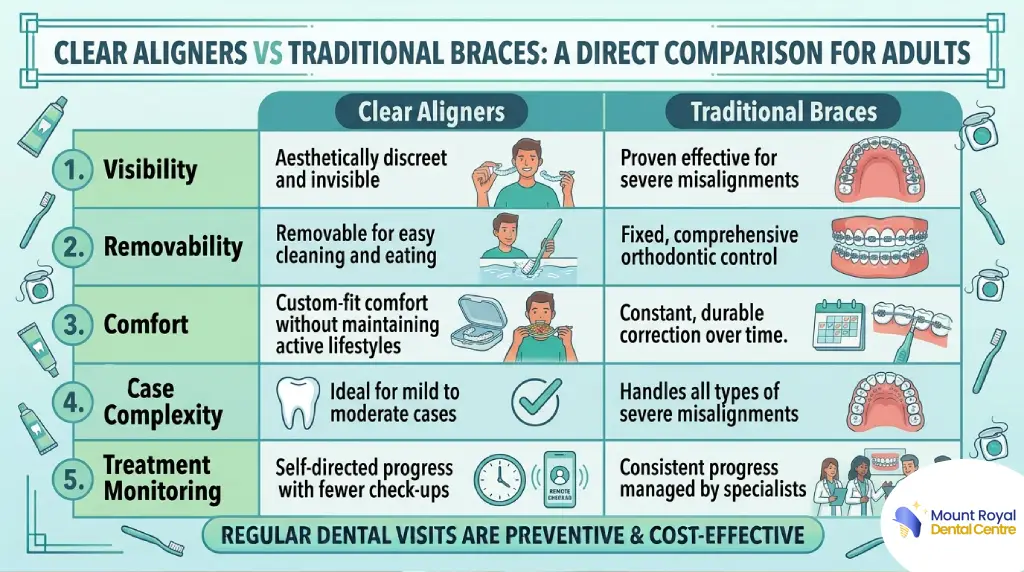
Clear Aligners vs Traditional Braces: Quick Comparison
| Feature | Clear Aligners | Traditional Braces |
|---|---|---|
| Appearance | Nearly invisible | Visible metal or ceramic brackets |
| Removable | Yes | No |
| Comfort | Smooth plastic trays | Brackets and wires may irritate cheeks |
| Food Restrictions | Minimal | Several foods should be avoided |
| Oral Hygiene | Easy to brush and floss | Requires extra cleaning effort |
| Office Visits | Usually fewer | Regular adjustment appointments |
| Discipline Required | High | Low |
| Best For | Mild to moderate cases | Mild to complex cases |
Appearance: Which Option Looks Better?
For many adults, appearance is one of the biggest deciding factors.
Clear Aligners
Clear aligners are made from transparent medical-grade plastic that fits snugly over your teeth. Because they are nearly invisible, most people won’t notice you’re wearing them during conversations, meetings, or social events.
This discreet appearance makes them especially appealing for adults working in professional environments or anyone who feels self-conscious about wearing braces.
Traditional Braces
Although braces have become smaller and less noticeable over the years, they are still visible when you smile or speak.
Metal braces remain the most common option, while ceramic braces offer a more subtle appearance by blending with the natural colour of your teeth.
Winner: Clear Aligners
Comfort: Which Treatment Feels Better?
Orthodontic treatment naturally involves some pressure as teeth gradually move into new positions. However, the overall experience differs between clear aligners and braces.
Clear Aligners
Because they are made from smooth plastic, clear aligners generally cause less irritation to your lips and cheeks.
Patients often notice mild pressure when switching to a new aligner tray, but this usually subsides within a day or two and indicates that the aligners are working as intended.
Traditional Braces
Brackets and wires may rub against the inside of your mouth, particularly during the first few weeks or after adjustments. Orthodontic wax can help reduce irritation while your mouth adapts.
Many patients also experience temporary soreness after routine tightening appointments.
While both treatments involve some discomfort, many adults find clear aligners more comfortable overall because they eliminate metal brackets and wires.
Winner: Clear Aligners
Effectiveness: Which Treatment Works Better?
This is where the answer becomes more nuanced.
Both clear aligners and traditional braces can deliver excellent results when treatment is planned correctly. However, the complexity of your orthodontic case plays a major role in determining which option is more appropriate.
Clear aligners are highly effective for many cases involving mild to moderate crowding, spacing, and certain bite concerns. They offer predictable tooth movement for patients who wear them consistently as directed.
Traditional braces, however, remain the gold standard for more complex orthodontic issues. Because they are fixed in place and allow for greater control over tooth movement, braces are often the preferred option for significant crowding, severe bite discrepancies, rotated teeth, or cases requiring more advanced correction.
Rather than asking which treatment is universally “better,” the more important question is which treatment is better suited to your individual smile.
Treatment Time: Which Option Is Faster?
One of the first questions adults ask before starting orthodontic treatment is, “How long will it take?” While everyone hopes for a quick transformation, the truth is that treatment time depends more on your individual dental needs than the appliance you choose.
Factors that influence treatment duration include:
- The severity of crowding or spacing
- Bite alignment
- Overall oral health
- Age
- Patient compliance (especially with clear aligners)
Clear Aligners
For mild to moderate orthodontic concerns, clear aligners may complete treatment in 12 to 18 months, although some patients notice improvements much sooner. Because each aligner is designed to move your teeth in small, controlled stages, following your treatment schedule is essential.
However, aligners only work as planned when worn for 20 to 22 hours every day. Frequently removing them or forgetting to wear them can delay your progress.
Traditional Braces
Treatment with traditional braces generally takes 18 to 24 months, though more complex cases may require additional time. Since braces remain attached to your teeth throughout treatment, they continuously apply gentle pressure without relying on patient compliance.
Although treatment may sometimes take slightly longer, braces often provide greater precision for correcting difficult orthodontic problems.
Which Is Faster?
For simple cases, clear aligners may finish treatment sooner. For complex tooth movements or significant bite corrections, traditional braces may provide more efficient and predictable results.
Winner: Tie—it depends on your individual case.
Cost Considerations
Many adults assume clear aligners are always more expensive than traditional braces. While this can be true in some cases, the cost of orthodontic treatment varies depending on several factors.
These include:
- The complexity of your orthodontic needs
- Length of treatment
- Number of aligners required
- Type of braces selected
- Whether refinements or additional adjustments are necessary
Instead of comparing price alone, it’s helpful to consider the overall value of treatment.
During your consultation, your dentist can provide a personalized estimate and explain available payment options or insurance benefits. Many dental insurance plans include orthodontic coverage that may help reduce out-of-pocket costs.
The best treatment is not necessarily the least expensive—it’s the one that provides predictable, long-lasting results for your smile.
Eating and Drinking During Treatment
Your daily eating habits can significantly influence which orthodontic option feels more convenient.
Clear Aligners
One of the biggest advantages of clear aligners is their removability.
You simply remove your aligners before eating and drinking anything other than water.
This means you can continue enjoying foods such as:
- Apples
- Popcorn
- Nuts
- Steak
- Pizza
- Corn on the cob
- Chewy breads
After eating, you’ll need to brush your teeth before placing the aligners back in to help prevent bacteria and staining.
Traditional Braces
Braces require more dietary caution.
Certain foods may damage brackets or bend wires, including:
- Sticky candy
- Caramel
- Gum
- Hard nuts
- Ice
- Popcorn kernels
- Hard candies
Patients often need to cut tougher foods into smaller pieces and chew carefully throughout treatment.
Winner: Clear Aligners
Oral Hygiene: Which Is Easier to Keep Clean?
Good oral hygiene is essential during any orthodontic treatment.
Healthy gums and clean teeth allow treatment to progress more smoothly while reducing the risk of cavities and gum disease.
Clear Aligners
Since aligners are removable, brushing and flossing remain virtually the same as before treatment.
Patients simply:
- Remove the aligners
- Brush thoroughly
- Floss normally
- Clean the aligners
- Reinsert them
This makes maintaining oral hygiene relatively straightforward.
Traditional Braces
Cleaning around brackets and wires requires additional time and attention.
Food particles can easily become trapped, increasing plaque buildup if brushing and flossing are not done carefully.
Many patients benefit from using:
- Interdental brushes
- Water flossers
- Orthodontic floss threaders
Regular professional cleanings become especially important throughout orthodontic treatment.
Winner: Clear Aligners
Lifestyle Differences
Your daily routine is another important consideration when choosing between clear aligners and braces.
Clear Aligners Fit Busy Adult Lifestyles
Adults often choose clear aligners because they fit seamlessly into professional and social settings.
They are ideal for people who:
- Attend frequent meetings
- Speak publicly
- Work in customer-facing roles
- Attend weddings or special events
- Prefer a discreet appearance
Many patients appreciate that most people won’t even notice they’re wearing aligners.
Traditional Braces Offer Constant Treatment
Braces require very little day-to-day decision-making.
Once they’re placed, they work around the clock.
This makes braces an excellent option for:
- Busy individuals who may forget to wear aligners
- Teenagers
- Patients with complex treatment plans
- Anyone who prefers not to manage removable appliances
Neither option is better for every patient—the right choice depends on your lifestyle and personal preferences.
Discipline Matters More Than Most People Realize
One of the biggest differences between clear aligners and traditional braces isn’t the technology—it’s patient responsibility.
Clear Aligners Require Commitment
To stay on schedule, you’ll need to:
- Wear them 20–22 hours daily
- Switch trays on time
- Clean them regularly
- Avoid losing them
- Remove them only when necessary
Even missing a few hours each day can affect tooth movement over time.
Braces Remove the Guesswork
Since braces stay attached to your teeth, treatment continues whether you’re thinking about it or not.
For patients who worry about remembering to wear aligners consistently, braces often provide greater peace of mind.
Who Is the Best Candidate for Clear Aligners?
Clear aligners are often an excellent choice for adults with:
- Mild to moderate crowding
- Small gaps between teeth
- Minor bite concerns
- Healthy gums
- Good oral hygiene habits
- A commitment to wearing aligners as directed
- A desire for discreet treatment
Patients who value flexibility and appearance often find clear aligners fit comfortably into their daily lives.
Who May Benefit More from Traditional Braces?
Traditional braces may be recommended for patients with:
- Severe crowding
- Significant overbite or underbite
- Crossbite
- Teeth requiring major rotation
- Complex orthodontic problems
- Younger patients who may struggle with compliance
Because braces provide continuous force and greater control over tooth movement, they remain the preferred solution for many challenging orthodontic cases.
The Importance of Your Orthodontic Consultation
Although online research is a great place to start, no article can determine which treatment is best for your smile.
Every mouth is different.
During your consultation, your dentist will evaluate:
- Tooth alignment
- Bite relationship
- Jaw function
- Gum health
- Existing restorations
- Oral hygiene
- Smile goals
Digital imaging, photographs, and X-rays help create a personalized treatment plan tailored to your needs.
This appointment is also an opportunity to discuss expected treatment time, costs, maintenance, and any questions you may have before beginning orthodontic care.
Both clear aligners and traditional braces can produce beautiful, healthy smiles when prescribed appropriately.
If you value discretion, convenience, and easier oral hygiene, clear aligners may be the better fit.
If your case is more complex or you prefer a treatment that doesn’t rely on daily compliance, traditional braces may offer greater predictability.
Ultimately, the best orthodontic treatment is the one that aligns with your dental needs, lifestyle, and long-term goals—not simply the newest or most popular option.
Common Myths About Clear Aligners and Traditional Braces
When researching orthodontic treatment, it’s easy to come across misinformation online. Let’s separate fact from fiction.
Myth 1: Clear Aligners Can Fix Every Orthodontic Problem
Fact: While clear aligners can effectively treat many mild to moderate orthodontic issues, they may not be suitable for every case. Patients with severe crowding, complex bite problems, or significant tooth rotations may achieve better results with traditional braces or a combination of treatments.
Myth 2: Braces Are Only for Teenagers
Fact: Adults of all ages choose orthodontic treatment. As long as your teeth and gums are healthy, it’s never too late to improve your smile.
Myth 3: Clear Aligners Don’t Hurt
Fact: Both braces and clear aligners create gentle pressure to move your teeth. It’s normal to experience mild discomfort for a few days after starting treatment or switching to a new aligner tray. This temporary soreness is usually a sign that your teeth are moving as planned.
Myth 4: Orthodontic Treatment Is Only Cosmetic
Fact: Straightening your teeth can improve more than your appearance. Properly aligned teeth are easier to clean, which may reduce the risk of cavities and gum disease. Correcting bite problems can also improve chewing efficiency and help prevent uneven wear on your teeth.
Myth 5: Once Treatment Ends, Your Teeth Stay Perfect Forever
Fact: Teeth naturally shift over time. Whether you choose clear aligners or traditional braces, wearing a retainer as instructed is essential for maintaining your results.
Clear Aligners vs Traditional Braces: Which Option Is Right for You?
There isn’t a one-size-fits-all answer.
Instead, the best choice depends on your oral health, treatment goals, lifestyle, and the complexity of your orthodontic needs.
Clear Aligners May Be the Right Choice If You:
✔ Want a discreet treatment option
✔ Have mild to moderate crowding or spacing
✔ Can wear aligners for 20–22 hours each day
✔ Want to remove your appliance while eating and brushing
✔ Prefer fewer dietary restrictions
✔ Value convenience and flexibility
Traditional Braces May Be Better If You:
✔ Have severe crowding or bite issues
✔ Need complex tooth movements
✔ Don’t want to worry about remembering to wear aligners
✔ Prefer a treatment that works continuously
✔ Need precise control for complicated orthodontic correction
Rather than focusing solely on appearance or convenience, consider the long-term health of your smile. An orthodontic consultation is the best way to determine which treatment can safely and effectively achieve your goals.
Questions to Ask During Your Consultation
Before starting treatment, consider asking your dentist:
- Am I a good candidate for clear aligners?
- Would braces produce a better long-term result?
- How long is my treatment expected to take?
- What will my treatment cost?
- Are payment plans available?
- Will my dental insurance cover part of the treatment?
- How often will I need follow-up appointments?
- What happens if I lose an aligner?
- Will I need a retainer after treatment?
- What can I do to keep my teeth healthy throughout treatment?
These questions can help you better understand your options and feel more confident about your decision.
Frequently asked questions
Are clear aligners as effective as traditional braces?
How many hours should I wear clear aligners each day?
Do braces work faster than clear aligners?
Can adults get braces?
Are clear aligners painful?
Can I eat whatever I want with clear aligners?
How do I clean my clear aligners?
Will orthodontic treatment affect my speech?
Do I need to wear a retainer after treatment?
How do I know which treatment is best for me?
Choosing between clear aligners and traditional braces is an important decision, but it doesn’t have to be overwhelming.
Both treatments have helped millions of people achieve healthier, straighter smiles. Clear aligners offer a discreet and convenient solution for many adults, while traditional braces remain an excellent option for more complex orthodontic cases.
The key is finding the treatment that best matches your smile, lifestyle, and long-term oral health goals. A personalized consultation allows your dentist to evaluate your unique needs and create a treatment plan that’s designed specifically for you.
Ready to Start Your Smile Journey?
Whether you’re interested in clear aligners or traditional braces, the first step is a professional evaluation.
At Mount Royal Dental Centre, our experienced team takes the time to understand your concerns, explain your treatment options, and recommend the solution that best fits your smile and lifestyle. We’ll answer your questions, discuss what to expect, and help you make an informed decision with confidence.
Book your consultation today and take the first step toward a healthier, straighter smile.
Table of Contents