
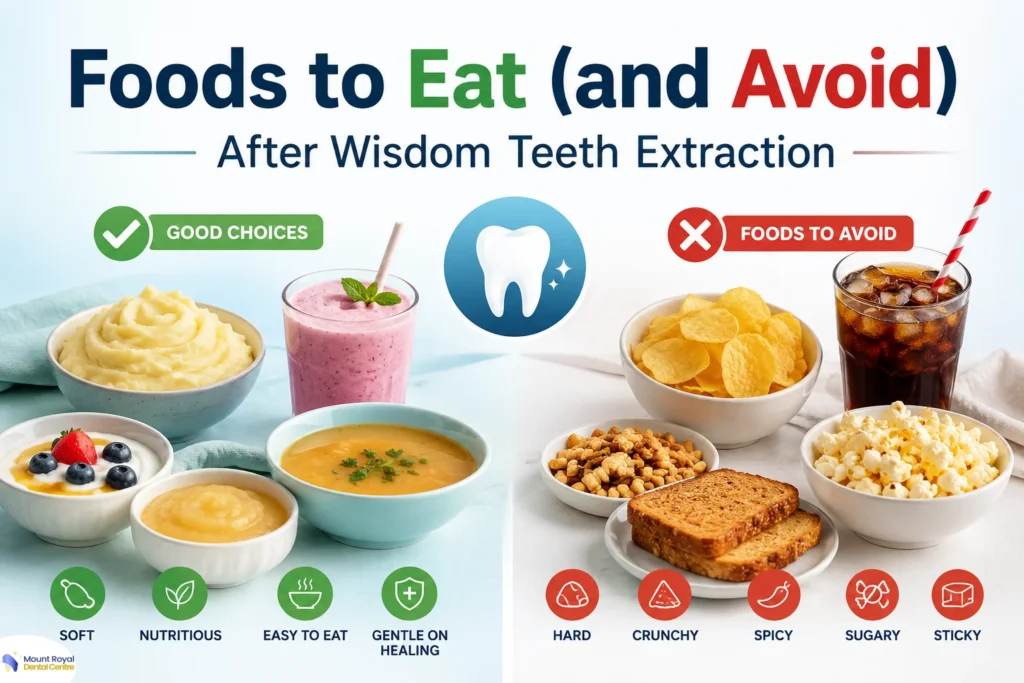
Foods to Eat (and Avoid) After Wisdom Teeth Extraction

After your wisdom teeth removal, one of the first questions you will probably ask is, “What can I eat?” As the numbness wears off and your mouth starts to feel sore, choosing the right foods becomes an important part of your recovery.
What you eat after wisdom teeth extraction can make a real difference in how quickly and comfortably you heal. Soft, nutritious foods help protect the extraction sites, reduce irritation, and give your body the nutrients it needs to recover. On the other hand, eating the wrong foods too soon can cause pain, slow the healing process, or even lead to complications such as dry socket.
In this guide, you will learn exactly what to eat after wisdom teeth removal, which foods to avoid, how your diet should change as you heal, and simple tips to make your recovery as comfortable and stress-free as possible.
Why Your Food Choices Matter After Wisdom Teeth Removal
After your wisdom teeth are removed, your body immediately begins the healing process. A blood clot forms in each extraction site, and it plays a vital role in protecting the exposed bone and nerves while new tissue grows underneath.
During the first 24 to 48 hours, these blood clots are delicate. If they become dislodged, healing can slow down and you may develop dry socket, one of the most common and painful complications after wisdom teeth removal. That is why eating the right foods is so important. Soft foods are gentle on the extraction sites, making it easier to eat without disturbing the healing area.
Your diet also affects how quickly your body recovers. Healing requires nutrients such as protein, vitamins, and minerals to repair damaged tissue and reduce inflammation. Eating nutritious, easy-to-chew foods gives your body the fuel it needs to recover more comfortably and efficiently.
In short, knowing what to eat after wisdom teeth removal is about more than staying comfortable. The right foods help protect the extraction sites, lower the risk of complications, and support a smoother, faster recovery.
What to Eat After Wisdom Teeth Removal: Your Recovery Timeline
Your diet will gradually return to normal as your mouth heals. Knowing what to eat at each stage of recovery can help you avoid complications and feel more confident about your food choices.
First 24 Hours
The first day after wisdom teeth removal is the most important for healing. During this time, stick to cool or room-temperature liquids and very soft foods that require little to no chewing. This helps protect the blood clot, reduces irritation, and gives your mouth the best chance to heal properly. Remember to stay hydrated, but avoid drinking through a straw.
Days 2–3
By the second and third day, the extraction sites are starting to heal, but they are still sensitive. Continue eating soft foods and gradually add more variety if you feel comfortable. Choose foods that are easy to chew and avoid biting directly over the extraction sites. Most people notice that pain and swelling begin to improve during this stage.
Days 4–7
As your recovery progresses, you can slowly introduce slightly firmer foods if they feel comfortable. Continue to avoid hard, crunchy, spicy, or crumbly foods that could irritate the healing sockets or become trapped in the area. If a food causes discomfort, wait a few more days before trying it again.
Week 2 and Beyond
By the second week, many people can enjoy most of their normal diet again. However, the extraction sites are still healing beneath the surface, so it is best to reintroduce tougher or crunchier foods gradually. Everyone heals at a different pace, so follow your dentist’s aftercare instructions and only return to your usual diet when your mouth feels ready.
Still Need Your Wisdom Teeth Assessed or Removed?
Book a consultation with our experienced Calgary dental team. We’ll guide you through the entire process—from your initial assessment to a comfortable recovery—with personalised care every step of the way.
The Best Foods to Eat After Wisdom Teeth Removal
When planning meals after wisdom teeth removal, keep one simple rule in mind: choose foods that are soft, smooth, and served cool or lukewarm. These foods are gentle on the extraction sites, easy to eat, and provide the nutrients your body needs to heal.
Here are some of the best foods to eat after wisdom teeth extraction.
Cool and Soothing Foods
These options can help soothe soreness and are especially comforting during the first day or two after surgery.
- Yogurt – Smooth, cool, and packed with protein and probiotics.
- Applesauce – Soft, easy to swallow, and requires no chewing.
- Pudding or custard – Gentle on your mouth and ideal when your appetite is low.
- Cottage cheese – A soft, protein-rich option that’s easy to eat.
Warm and Comforting Foods
Once you’re ready for something more filling, these foods are a great choice. Just make sure they are warm, not hot, as high temperatures can irritate the healing area.
- Mashed potatoes – Soft, comforting, and easy to enjoy.
- Oatmeal or porridge – Filling and gentle once cooled to a lukewarm temperature.
- Scrambled eggs – Soft, easy to chew, and an excellent source of protein.
- Blended vegetable soups – Nutritious and satisfying without the need for chewing.
Smooth Drinks and Blended Foods
If chewing feels uncomfortable, these options make it easy to stay nourished.
- Smoothies – A simple way to enjoy fruit, vegetables, and protein. Drink from a cup or eat with a spoon—avoid using a straw, as the suction can disturb the blood clot.
- Protein shakes – A convenient way to support healing when eating solid food is difficult.
- Broth or smooth soups – Hydrating, nourishing, and easy on your mouth.
Soft Foods as You Heal
As your mouth becomes more comfortable, you can slowly add these soft foods to your meals.
- Mashed banana – Naturally soft, nutritious, and easy to eat.
- Mashed or plain avocado – Creamy, filling, and rich in healthy fats.
- Well-cooked pasta or noodles – Soft and satisfying when cooked until tender.
- Soft, flaky fish – A great source of protein once you’re comfortable chewing gently.
- Refried beans or smooth hummus – Soft, filling, and packed with protein and fibre.
Focus on Protein for Faster Healing
No matter what stage of recovery you’re in, try to include protein with every meal. Protein helps repair tissue and supports faster healing after wisdom teeth removal.
While treats like jelly or ice cream may feel soothing, they shouldn’t be your main source of nutrition. A balanced diet with plenty of protein, vitamins, and fluids will help your body recover more quickly and comfortably.
Eat to Heal, Not Just Stay Comfortable
After wisdom teeth removal, your diet does more than keep you comfortable—it also helps your body heal. Choosing nutritious, soft foods can support tissue repair, reduce inflammation, and make your recovery smoother.
One of the most important nutrients is protein, which helps rebuild the tissues around the extraction sites. Easy-to-eat protein sources include scrambled eggs, Greek yogurt, cottage cheese, protein shakes, soft beans, and flaky fish.
Your body also benefits from vitamins and minerals, which support the healing process and your immune system. Smoothies made with fruit, blended vegetable soups, mashed avocado, and other soft whole foods are simple ways to get these nutrients without irritating your mouth.
Don’t forget to stay hydrated. Drinking plenty of water helps your body heal and keeps your mouth from becoming dry. Just remember to drink from a cup and avoid using a straw during the first few days, as the suction can dislodge the blood clot.
The good news is that you don’t need a complicated meal plan. A balanced diet of soft, nutritious foods is usually all your body needs for a healthy recovery after wisdom teeth extraction.
Foods to Avoid After Wisdom Teeth Removal
While your mouth is healing, some foods can slow recovery or increase the risk of complications such as dry socket. It’s best to avoid anything that could irritate the extraction sites or become trapped in the healing sockets.
Hard and Crunchy Foods
Foods like chips, popcorn, pretzels, nuts, and hard candy can damage the healing tissue or leave small pieces behind. Popcorn kernels are especially known for getting stuck in extraction sites.
Sticky and Chewy Foods
Avoid gum, caramel, toffee, and chewy sweets. These foods can pull on the healing area and are difficult to remove from your mouth.
Small Seeds and Grains
Foods such as rice, quinoa, chia seeds, and seeded crackers can easily become lodged in the extraction sockets, making the area harder to keep clean.
Spicy Foods
Spicy meals may irritate sensitive gum tissue and make your mouth feel more uncomfortable during the early stages of recovery.
Acidic Foods and Drinks
Citrus fruits, tomatoes, fruit juices, and other acidic foods can sting the extraction sites and cause unnecessary discomfort.
Hot Foods and Hot Drinks
For the first few days, choose foods that are cool or lukewarm. Very hot foods and drinks can irritate the surgical area and may interfere with the healing process.
Tough Meats and Raw Vegetables
Steak, jerky, raw carrots, and other foods that require heavy chewing should wait until your mouth has healed further.
Crumbly Foods
Dry foods such as crackers, biscuits, cookies, toast, and crusty bread can leave crumbs behind that become trapped in the extraction sites.
A Simple Rule to Follow
If you’re unsure whether a food is safe, ask yourself this question: Is it soft, smooth, and easy to eat without much chewing? If the answer is no, it’s usually best to wait a few more days before adding it back to your diet.
Avoid Straws and Smoking After Wisdom Teeth Removal
If there is one piece of aftercare advice you should never ignore, it is this: do not use a straw or smoke after wisdom teeth removal.
Both create suction inside the mouth, and that suction can pull the protective clot right out of the socket, leading to dry socket. Dry socket is genuinely uncomfortable and can noticeably slow your healing. Sipping from a cup and skipping the straw is a tiny change that makes an enormous difference. Alcohol and carbonated, fizzy drinks are also best avoided in the early days, since they can irritate the area and interfere with healing.
Not Sure About Your Dental Symptoms?
Get clear guidance from our dental team and find the right next step to protect your smile.
Common mistakes that can slow recovery
Most people recover without any issues, but a few common mistakes can delay healing after wisdom teeth removal.
Returning to Solid Foods Too Soon
Your mouth may start feeling better before the extraction sites have fully healed. Introduce firmer foods gradually, and don’t rush back to crunchy or chewy meals.
Skipping Meals
It is normal to have a reduced appetite after surgery, but your body still needs nutrients to heal. If eating feels uncomfortable, choose smoothies, soups, yogurt, or protein shakes to stay nourished.
Chewing on the Extraction Side
As you begin eating solid foods again, chew on the opposite side of your mouth whenever possible. This helps protect the healing sockets and reduces irritation.
Rinsing Too Vigorously
Avoid forceful rinsing during the first 24 hours, as it can disturb the blood clot. Once your dentist recommends rinsing, use a gentle warm saltwater rinse to keep the area clean.
Not Drinking Enough Water
Staying hydrated is an important part of healing. Keep a bottle or glass of water nearby and take small sips throughout the day to avoid dehydration.
Staying hydrated the right way
Drinking enough water helps your body heal and keeps your mouth comfortable during recovery.
Choose plain water whenever possible and sip it regularly from a cup. Avoid straws, and stick to cool or lukewarm drinks during the first few days. It’s also best to avoid alcohol, fizzy drinks, and sugary or acidic beverages until your mouth has had more time to heal.
After the first day, a lukewarm herbal tea can be a soothing option if it feels comfortable.
Tips for Eating Comfortably After Wisdom Teeth Removal
A few simple habits can make eating easier while your mouth heals.
- Let hot foods and drinks cool until they are lukewarm before eating or drinking.
- Take small bites and eat slowly to avoid putting pressure on the extraction sites.
- As you recover, chew on the opposite side of your mouth whenever possible.
- Cut food into small pieces so it requires very little chewing.
- Stock up on soft foods before your procedure so you have easy meal options ready at home.
- Once your dentist says it is safe, gently rinse with warm salt water after meals to help keep the extraction sites clean.
Following these simple aftercare tips can make your wisdom teeth recovery more comfortable, reduce the risk of complications, and help you get back to eating normally as soon as possible.
A Simple 3-Day Meal Plan After Wisdom Teeth Removal
Not sure what to eat after wisdom teeth removal? This sample meal plan can help you get started. Feel free to adjust it based on your comfort level and your dentist’s aftercare instructions.
Day 1
The first day is all about protecting the extraction sites while staying hydrated and nourished.
- Breakfast: Plain yogurt
- Morning snack: Fruit smoothie (drink from a cup, not a straw)
- Lunch: Lukewarm blended vegetable soup
- Afternoon snack: Applesauce
- Dinner: Mashed potatoes served warm, not hot
Day 2
As your mouth starts to feel a little better, you can add more soft, protein-rich foods.
- Breakfast: Soft oatmeal or porridge (cooled to lukewarm)
- Morning snack: Protein shake
- Lunch: Soft scrambled eggs with mashed avocado
- Afternoon snack: Pudding or custard
- Dinner: Smooth puréed soup
Day 3
If you’re healing well and eating feels more comfortable, you can slowly introduce a little more variety.
- Breakfast: Cottage cheese with mashed banana
- Morning snack: Fruit smoothie
- Lunch: Soft, well-cooked pasta cut into small pieces
- Afternoon snack: Yogurt
- Dinner: Soft, flaky fish with mashed potatoes
Everyone heals at a different pace after wisdom teeth removal. If a food feels uncomfortable or causes pain, stop eating it and return to softer options for another day or two. There is no benefit to rushing back to your normal diet. Taking it slowly helps protect the extraction sites, lowers the risk of complications, and supports a smoother recovery.
When Should You Call Your Dentist?
Some pain, swelling, and mild discomfort are completely normal after wisdom teeth removal. In most cases, these symptoms gradually improve over the first few days.
However, you should contact your dentist if you notice any of the following:
- Severe pain that gets worse instead of better, especially after the first two or three days.
- Swelling that continues to increase rather than gradually going down.
- Bleeding that does not stop after following your dentist’s aftercare instructions.
- Signs of infection, such as a fever, pus, a persistent bad taste in your mouth, or increasing redness around the extraction site.
- Sudden, intense pain a few days after surgery, which may be a sign of dry socket.
If something doesn’t feel right, don’t ignore it. It’s always better to call your dentist and get professional advice than to wait and hope the problem goes away on its own.
At Mount Royal Dental Centre, our emergency dental treatment team is here to help if you experience unexpected pain or complications during your wisdom teeth recovery. Prompt care can relieve discomfort, protect your healing, and get your recovery back on track.
Frequently asked questions
How soon after wisdom teeth removal can I eat? Once the numbness starts to wear off and you feel steady, you can begin with liquids and very soft, cool foods. Start gently and see how you feel before adding anything more substantial.
Can I eat ice cream after wisdom teeth removal? Soft, cool foods can feel soothing, so plain ice cream is often fine for many people, though skip anything with hard mix-ins, nuts, or crunchy pieces. If your teeth are sensitive to cold, choose something less cold instead.
When can I go back to eating normally? Many people return to most normal foods within about a week or two, though this varies from person to person. Reintroduce firmer foods gradually and follow the specific guidance your dentist provides.
Why can I not use a straw? The suction created by a straw can dislodge the blood clot protecting the socket, which can cause dry socket. Sip from a cup instead for at least the first several days.
What is dry socket, and how do I avoid it? Dry socket occurs when the protective clot is lost too early, exposing the socket and causing significant pain. You can lower your risk by avoiding straws, smoking, vigorous rinsing, and hard or crunchy foods in the early days.
Can I drink coffee after wisdom teeth removal? It is best to wait and to avoid hot drinks in the first day or two, since heat can disturb the clot. When you do return to coffee, let it cool down and skip the straw.
How much protein do I really need while healing? There is no need to count grams, but including a soft protein source at each meal, such as eggs, yogurt, or a protein shake, gives your body good support for tissue repair.
Is it normal to lose my appetite after the procedure? Yes, a reduced appetite is common in the first day or two. Even so, try to have small amounts of soft, nourishing food and plenty of fluids, since your body still needs fuel to heal.
Do I need to take time off work or school? Many people take a day or two to rest, especially right after the procedure. How much time you need depends on your case and how you feel, so follow your dentist’s advice.
Heal comfortably with the right care
Recovering from wisdom teeth extraction is far easier when you know what to eat and what to skip. Soft, gentle, nourishing foods protect the healing area and keep you comfortable, while avoiding hard, crunchy, and suction-causing habits keeps complications away. A little preparation before your procedure, and a little patience afterward, go a long way toward a smooth and comfortable recovery.
At Mount Royal Dental Centre, we’re committed to making your experience as smooth and stress-free as possible. From your initial consultation to your recovery, our experienced team will provide clear aftercare instructions, answer your questions, and ensure you feel supported every step of the way.
Need wisdom teeth care or have questions about your recovery? Book online or call us at (587) 417-2939. Our Calgary team is here to help you heal comfortably and confidently.
Table of Contents