
Can Clear Aligners Fix Crowded, Crooked or Gapped Teeth?
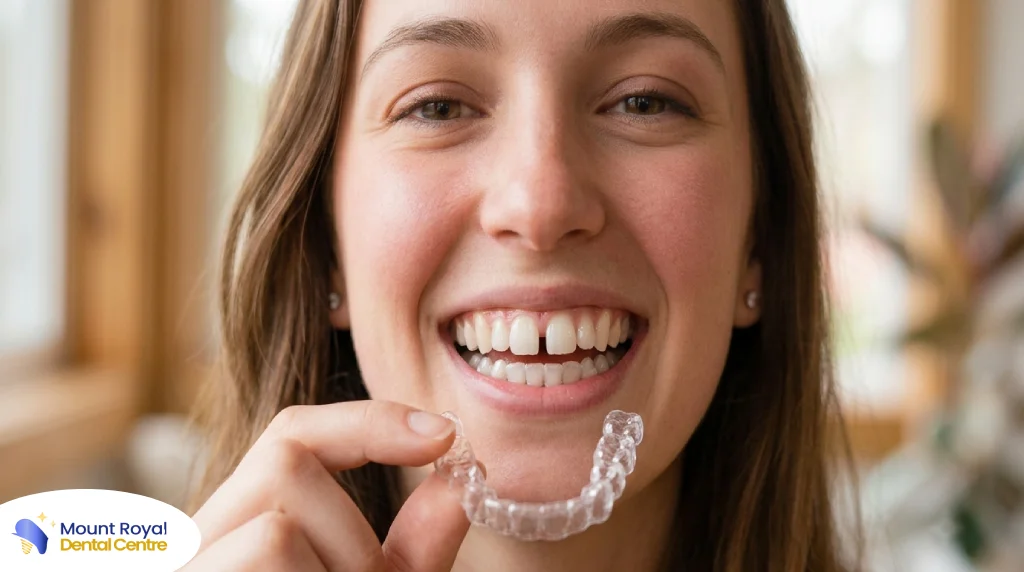
You catch yourself in a photo and notice the tooth sitting behind the others, or that small gap between your front teeth that never quite closed. Many adults reach that point and want to straighten their smile, but do not want to spend years wearing traditional metal braces.
For many people, clear aligners can be a practical option. They can straighten crowded, crooked, and gapped teeth in many mild to moderate cases. More complex cases, especially those involving the position of the jaw rather than the teeth, may require a different approach.
The best way to know if clear aligners are right for you is with a proper dental assessment and 3D scan. Your smile deserves more than a guess in the mirror.
What Do Crowded, Crooked, and Gapped Teeth Mean?
Crowded, crooked, and gapped teeth may look like different problems, but they often come down to one simple issue: there is either too little or too much space for your teeth.
Crowded teeth happen when there is not enough room, causing teeth to overlap, twist, or sit behind one another. Crooked teeth may sit at an angle or rotate within the row, often as a result of crowding. Gapped teeth, sometimes called a diastema, are the opposite. There is extra space between two or more teeth.
The important question is what is causing the problem. If the issue is mainly the position of your teeth, clear aligners can often help. If the problem involves the size or position of your jaw, treatment may be more complex and could require braces or an orthodontic assessment.
Crowding can also affect more than the appearance of your smile. Overlapping teeth can be harder to brush and floss properly, allowing plaque to build up in areas that are difficult to reach. Over time, this can increase the risk of tooth decay and gum problems.
How Clear Aligners Move Your Teeth
Clear aligners are thin, custom-made trays that fit snugly over your teeth. You wear a series of trays, with each one designed to move your teeth a little closer to their planned position.
Your dentist creates the treatment plan using a digital 3D scan of your mouth. This allows them to plan how each tooth needs to move before treatment begins. You will then change to a new aligner as directed, usually every week or two, depending on your treatment plan.
Some teeth need a little extra help. Small tooth-coloured attachments can be placed on certain teeth to give the aligners a better grip. They can help with movements such as rotating a tooth or moving it slightly up or down.
In some cases, your dentist may also recommend interproximal reduction (IPR). This involves gently removing a very small amount of enamel between selected teeth to create additional space. It is a routine procedure and should not be painful.
The biggest factor you control is how consistently you wear your aligners. Most patients need to wear them for around 20 to 22 hours a day, removing them mainly for eating, drinking anything other than water, and brushing. Wearing them as recommended helps keep your treatment moving according to plan.
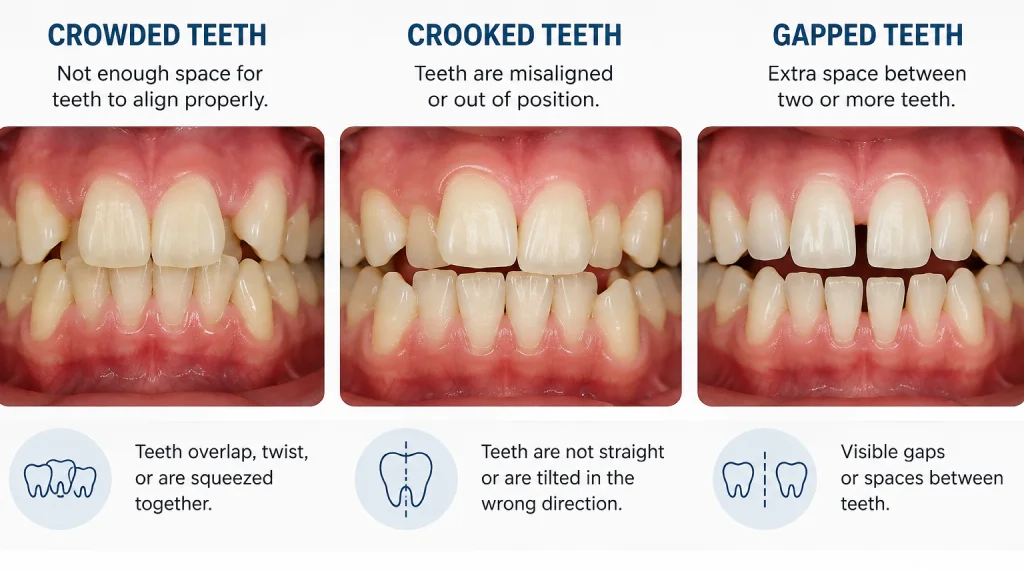
Crowded Teeth
Crowding is one of the most common reasons adults consider clear aligners. Mild to moderate crowding can often be treated effectively by gradually moving overlapping teeth into better alignment. If a little extra space is needed, your dentist may recommend IPR to create room without removing a tooth.
More severe crowding can be harder to treat with aligners alone. If there is significant lack of space or the jaw does not provide enough room for the teeth, other options such as braces or tooth removal may be considered.
A dental exam and 3D scan can show how much movement is needed and whether clear aligners are a suitable option for your smile.
Crooked or Rotated Teeth
Straightening crooked teeth is one of the areas where clear aligners can work very well. Mild to moderate cases can often be treated by gradually guiding teeth into a straighter position.
Aligners can also help with rotated teeth, especially when small attachments are used to give the trays a better grip. Slightly rotated teeth are usually easier to move, while more severely rotated teeth may take longer or require a different treatment approach.
Canines can sometimes be more challenging because of their rounded shape and position in the mouth. Attachments can give the aligner extra support and help guide these teeth more effectively.
Gaps Between Teeth
Gaps between teeth are another common reason people consider clear aligners. Small to moderate spaces, particularly between the front teeth, can often be closed effectively with a series of custom-made aligners. Each tray applies gentle, controlled pressure to gradually move the teeth closer together until the space is closed.
One of the advantages of clear aligners is that your treatment can be planned before you begin. The size and cause of the gap can affect which treatment is best. A larger space, or a gap caused by a missing tooth, may require more than aligners alone. Depending on your situation, your dentist may recommend braces or a restorative option such as a dental bridge or dental implant.
It is also important to think about what happens after the gap is closed. Teeth can naturally shift back toward their original positions, especially when there is a noticeable space between them. The gaps may try to reopen, so a retainer afterward is recommended by the dentist to keep the gap closed.
Where Clear Aligners May Not Be the Best Fit
Clear aligners can be an excellent option for many patients, but they are not right for everyone. Being clear about their limitations is an important part of choosing the right treatment.
Aligners may not be the first choice when:
- Crowding or spacing is severe, or the problem is mainly related to the jaw rather than the position of the teeth.
- There is a more complex bite issue, such as a significant overbite, underbite, crossbite, or open bite.
- Teeth need to move a long distance vertically or several teeth require significant rotation.
- Gum disease, tooth decay, or other dental problems need to be treated before teeth can be moved safely.
This does not necessarily mean clear aligners are off the table. Depending on your situation, braces may be a better option, or aligners may be combined with other dental treatment. In some cases, we may first address existing dental concerns and then begin aligner treatment once your teeth and gums are healthy.
The important thing is that your treatment should be based on your individual problem and difficulties. So grab a professional consultation today.
Clear Aligners or Braces?
If you are deciding between clear aligners and braces, the right choice depends on your teeth, your treatment needs, and what works best for your lifestyle.
For many mild to moderate cases involving crowded, crooked, or gapped teeth, both options can achieve excellent results. Clear aligners offer a more discreet way to straighten your teeth. They can be removed for eating, brushing, and flossing, and there are no brackets or wires that can rub against your cheeks.
Braces can be a better option for more complex cases, including severe crowding, significant rotations, and certain bite problems. They also do not rely on you remembering to put them back in after meals or cleaning.
That is the main difference to consider. Clear aligners give you more freedom, but they also require consistency. You typically need to wear them for around 20 to 22 hours a day to stay on track. Braces stay in place throughout treatment, but they are more noticeable.
During your consultation, your dentist can assess your smile and help you decide which option makes the most sense for your dental needs and everyday life.
How Long Does Clear Aligner Treatment Take?
Clear aligner treatment can take anywhere from about six to eighteen months, depending on your smile and how much movement is needed. Minor crowding or small gaps may be corrected in less time, while more involved cases can take longer.
Your treatment time also depends on how consistently you wear your aligners. Following your dentist’s instructions and wearing your trays for the recommended 20 to 22 hours each day can help keep your treatment on schedule.
Once your teeth reach their planned positions, treatment does not quite end there. You will need to wear retainers to help keep your new smile in place. Teeth naturally have a tendency to shift back toward their previous positions, which is known as relapse.
Are You a Good Candidate for Clear Aligners?
You may be a good candidate for clear aligners if you have mild to moderate crowding, crooked, or gapped teeth, and your teeth and gums are healthy. You also need to be comfortable wearing your aligners consistently as recommended.
The best way to know if clear aligners are right for you is with a proper dental assessment. During your consultation, your dentist will look at your teeth, bite, and gums and use a 3D scan to understand how your teeth need to move.
From there, you can find out whether clear aligners can achieve the results you want or whether another option, such as braces, would be more suitable. Your dentist can also explain your expected treatment time and what wearing aligners will be like day to day.
See whether aligners suit your smile
Mount Royal Dental Centre provides clear aligner and Invisalign® treatment with Dr. Jessy in Calgary’s Beltline. We are open 7 days a week.
Clear aligners at Mount Royal Dental Centre
Our team offers personalized clear aligner and Invisalign® treatment with professionals who, planned around a full smile assessment and a digital scan. Read more about our clear aligner treatment, meet the team on our About page, or look through our new patient information.
Frequently Asked Question
Can clear aligners fix severe crowding?
If there is not enough room in the jaw for the teeth, your dentist may recommend options such as tooth removal, braces, or orthodontic treatment. A dental exam and 3D scan can show how much movement is needed and help determine whether clear aligners are a suitable choice for your smile.
Do clear aligners work as well as braces?
How long does it take to close a gap?
Do clear aligners hurt?
How many hours a day do I have to wear them?
Can I get clear aligners in Calgary at Mount Royal Dental Centre?
Table of Contents