
5 Benefits of Replacing Missing Teeth Early
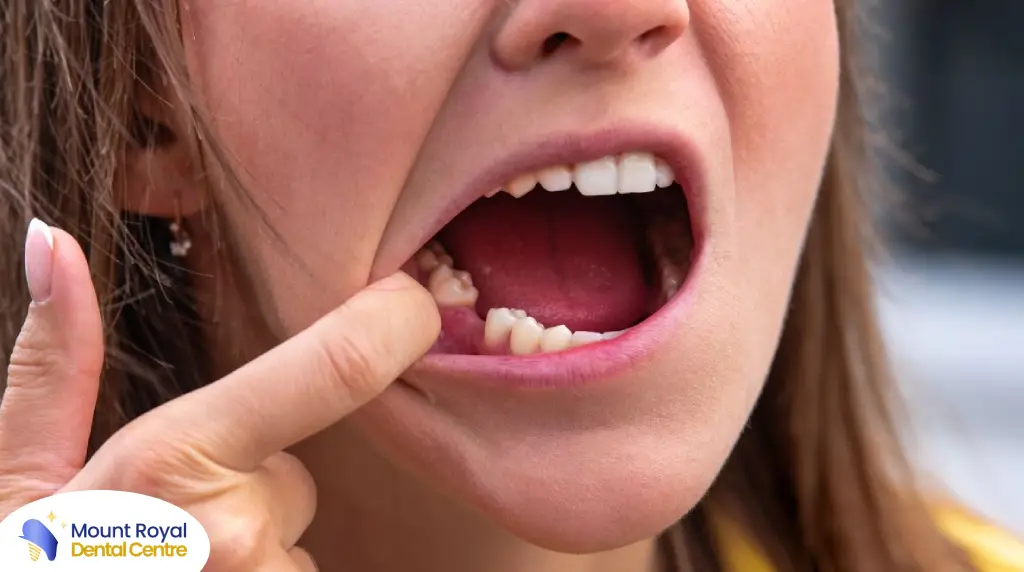
Losing a tooth can happen for many reasons. Tooth decay, gum disease, an accident, or an extraction may leave you with a gap in your smile. While it may be tempting to put off replacing a missing tooth, especially if it is not causing pain, waiting too long can affect more than the appearance of your smile.
A missing tooth can influence how you chew, speak, and maintain your oral hygiene. Over time, the surrounding teeth and supporting structures can also be affected. The good news is that replacing a missing tooth does not necessarily mean choosing one solution for everyone. Depending on your oral health, the location of the missing tooth, your preferences, and your treatment goals, your dentist may recommend options such as a dental implant, dental bridge, or another tooth-replacement solution.
At Mount Royal Dental Centre, our approach is focused on helping patients understand their options and choose treatment based on their individual needs. Our Calgary dental team provides comprehensive care, including restorative treatments such as dental implants and dental bridges.
If you have recently lost a tooth, or have been living with a missing tooth for some time, here are five important reasons to consider replacing it sooner rather than later.
1. Replacing a Missing Tooth Helps Protect Your Remaining Teeth
One of the biggest reasons to replace a missing tooth is to help maintain the position and function of the teeth around it.
Your teeth are not completely independent. They work together as part of your bite. When one tooth is missing, the surrounding teeth may have more space to move into. Over time, this can contribute to changes in the way your teeth meet when you bite and chew.
For example, imagine a tooth missing from the middle of a row. The teeth on either side of the gap no longer have the same neighbouring support. Depending on the situation, adjacent teeth may gradually shift or tilt toward the open space.
This does not necessarily happen immediately. That is one reason people sometimes underestimate the importance of replacing a missing tooth. A gap that looks harmless today may contribute to more complicated dental concerns over time.
A change in tooth position can also make cleaning between certain teeth more difficult. Areas that are harder to clean may allow plaque and food debris to accumulate, potentially increasing the risk of cavities and gum problems.
Replacing the missing tooth can help restore the continuity of your smile and support a more balanced bite.
Why early treatment matters
The longer you wait, the more your dentist may need to consider changes that have occurred around the missing tooth. Your treatment plan may therefore be more straightforward when the surrounding teeth and supporting structures are in a favourable condition.
This does not mean that a missing tooth must always be replaced immediately. Every situation is different, and your dentist can assess your mouth and discuss the appropriate timing and options.
If you have a missing tooth, an examination can help determine whether the surrounding teeth have already shifted and what replacement options may be suitable for you.
Have a Missing Tooth?
Explore your tooth replacement options with our dental team and take the next step toward a healthy, complete smile.
2. It Can Help Maintain Your Ability to Chew Comfortably
Your teeth are designed to work together when you eat. Each tooth contributes to biting and chewing, so losing even one tooth can change how you distribute pressure during meals.
You may find yourself naturally chewing on the opposite side of your mouth to avoid the area where the tooth is missing. At first, this may not seem like a significant problem. However, consistently relying more heavily on one side can change your normal chewing pattern.
Some people also adapt their diet after losing a tooth. They may avoid foods that are harder, crunchier, or more difficult to chew because eating becomes uncomfortable or inconvenient.
Replacing the missing tooth can help restore more balanced chewing function.
A complete smile is about more than appearance
When people think about replacing a missing tooth, they often focus first on how their smile looks. Appearance is certainly an important consideration, but restoring function is equally valuable.
A properly planned tooth replacement can help you feel more comfortable when eating and reduce the need to consciously avoid the missing area.
Depending on the location and number of missing teeth, your dentist may discuss options such as a dental bridge or dental implant.
A dental bridge can replace a missing tooth by using neighbouring teeth for support, while a dental implant is designed to replace the tooth root and support a replacement tooth. The best option depends on factors such as your oral health, bone condition, the location of the missing tooth, and your overall treatment goals.
At Mount Royal Dental Centre, dental implants are among the restorative services offered to patients who need tooth replacement.
3. Early Replacement Can Help Support the Jawbone
One of the less visible consequences of tooth loss involves the bone that previously supported the tooth.
Natural teeth are anchored in the jawbone. When a tooth is lost, the area no longer receives the same stimulation associated with the natural tooth root. Over time, the bone in that area can decrease in volume.
This process is often called bone resorption.
Because changes to the jawbone happen beneath the gums, you may not notice them right away. However, they can become important when you eventually decide to replace the missing tooth.
For patients considering dental implants, the condition and amount of available bone are particularly important. Dental implants are placed into the jawbone, so your dentist needs to evaluate the area carefully before determining whether an implant is appropriate.
Why waiting can sometimes make treatment more complicated
If substantial bone loss has occurred, there may be less bone available to support an implant. In some cases, additional procedures may be considered to prepare the area for implant treatment.
That does not mean someone with a long-standing missing tooth cannot receive an implant. Many patients with older tooth loss may still have replacement options. It simply means that your dentist needs to assess the condition of the area rather than assuming the treatment will be the same as it would have been immediately after tooth loss.
Replacing a missing tooth earlier may allow your dental team to address the situation before additional changes occur.
Your dentist can evaluate your individual situation
There is no single timeline that applies to everyone. Factors such as the reason for tooth loss, the location of the tooth, your gum health, your bone levels, and your general oral health all matter.
If you are considering an implant, your dentist may use an examination and dental imaging to evaluate the area and determine what treatment may be appropriate.
The important point is simple: a missing tooth should not automatically be considered a problem that can be ignored indefinitely.
4. Replacing Missing Teeth Can Support a Healthy, Confident Smile
A gap in your smile can affect the way you feel about your appearance.
Some people are completely comfortable with a missing tooth, while others become increasingly self-conscious when smiling, talking, or meeting people. This can be especially noticeable when the missing tooth is toward the front of the mouth.
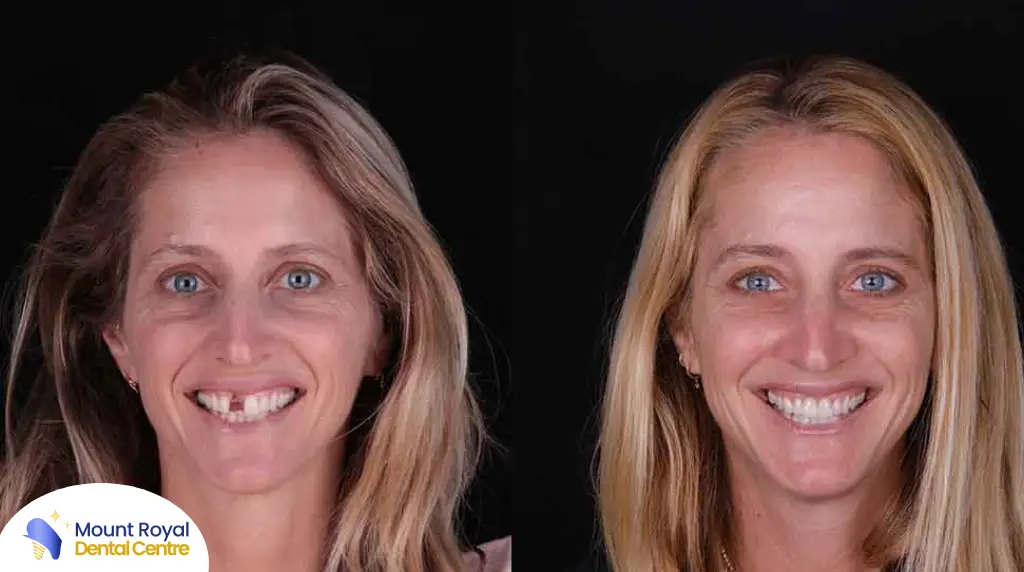
Replacing the tooth can help restore the appearance of your smile and give you greater confidence in everyday situations.
But confidence is not only about having perfectly aligned teeth. It is also about being able to smile, speak, and eat without constantly thinking about the missing tooth.
Tooth replacement can look natural
Modern restorative dentistry offers several ways to replace missing teeth while aiming for a natural-looking result.
The appropriate solution depends on your individual circumstances. Your dentist will consider factors such as:
- The location of the missing tooth
- The number of missing teeth
- The health of your gums
- The condition of neighbouring teeth
- The amount of available jawbone
- Your bite
- Your preferences and treatment goals
- Your overall oral health
A dental implant may be recommended in some cases, while a dental bridge or another restorative option may be more appropriate in others.
The goal is not simply to fill a gap. It is to develop a treatment plan that considers the health, function, and appearance of your smile as a whole.
At Mount Royal Dental Centre, patient-focused care and personalized treatment planning are central to the practice’s approach.
Ready to Replace Your Missing Tooth?
Don’t let a missing tooth affect your smile, chewing, or long-term oral health. Book a consultation with our Calgary dental team to explore personalized tooth replacement options and find the right solution for your smile.
5. Early Treatment May Help Prevent More Complicated Dental Problems
Perhaps the most important benefit of addressing a missing tooth early is that it gives you the opportunity to manage the situation before additional dental changes develop.
A missing tooth may initially seem like an isolated issue. But because your teeth, gums, bite, and jawbone work together, changes in one area can affect other areas over time.
Delaying treatment may allow:
- Nearby teeth to shift into the space
- Your bite to change
- Chewing patterns to change
- Bone levels in the area to decrease
- Cleaning around the affected area to become more challenging
- Other dental concerns to develop around the gap
Not every person will experience all of these changes, and the effects can vary considerably from one patient to another.
However, addressing the missing tooth gives your dentist the opportunity to evaluate the situation and discuss preventive or restorative options.
In many cases, early planning is easier than trying to correct several related issues later.
What Are Your Options for Replacing a Missing Tooth?
There is no universal solution for every missing tooth. Your dentist can assess your oral health and explain which options may be suitable.
Dental Implants
A dental implant is designed to replace the root portion of a missing tooth. A replacement tooth is then attached to the implant after the appropriate treatment process.
Dental implants can be used to replace individual missing teeth and may also play a role in more extensive tooth-replacement plans.
One of the advantages of implants is that they are designed to function as a replacement for the tooth root rather than simply sitting above the gumline.
However, implants are not automatically the best choice for every patient. Your dentist will need to assess your gums, jawbone, bite, and overall oral health before recommending treatment.
Mount Royal Dental Centre lists dental implants as one of its restorative dental services, describing them as an option for replacing missing teeth and restoring comfort and function.
Dental Bridges
A dental bridge is another option for replacing a missing tooth.
A bridge typically uses the teeth adjacent to the space as support for the replacement tooth. The design and preparation required depend on the specific circumstances.
Bridges can provide a fixed tooth-replacement option without requiring an implant to be placed in the jawbone.
Whether a bridge is appropriate depends on factors such as the condition of the neighbouring teeth and the location of the missing tooth.
Mount Royal Dental Centre offers dental bridges as part of its restorative dental services.
Other Tooth-Replacement Options
For patients who are missing multiple teeth or all of their teeth, other restorative approaches may be considered.
The right solution depends on the number and location of missing teeth, the health of the remaining teeth and gums, bone levels, functional needs, and personal preferences.
Rather than choosing a treatment based solely on what worked for someone else, it is best to have your own mouth assessed by a dental professional.
What Happens If You Wait to Replace a Missing Tooth?
It is common for people to postpone treatment because the missing tooth is not painful.
However, the absence of pain does not necessarily mean that nothing is changing.
Tooth loss itself may not cause ongoing discomfort, but changes can occur around the missing tooth. Your neighbouring teeth may shift, your bite may adapt, and the supporting bone may change over time.
There may also be practical consequences. You might begin chewing on one side more often, avoid certain foods, or feel uncomfortable showing your smile.
The longer you wait, the more important it becomes to evaluate what has changed.
This is why a dental examination is valuable even if you lost the tooth months or years ago. Your dentist can determine the current condition of the area and explain which treatment options remain available.
Can a Missing Tooth Be Replaced Years Later?
Yes, a missing tooth that has been absent for a long time may still be replaceable.
However, the treatment plan may be different from the plan that would have been considered immediately after tooth loss.
Your dentist will examine the area and may recommend dental imaging to evaluate the teeth, bone, and surrounding structures.
For example, if you are interested in a dental implant, your dentist needs to determine whether there is enough suitable bone to support the implant. If bone loss has occurred, additional treatment may sometimes be considered before implant placement.
Similarly, if you are considering a bridge, the health and strength of the neighbouring teeth need to be evaluated.
So, if you have been living with a missing tooth for several years, do not assume that it is too late to do anything about it. Schedule an examination and ask about your current options.
What Should You Do After Losing a Tooth?
If you have recently lost a tooth, it is a good idea to contact your dentist rather than simply waiting to see what happens.
Your dentist can evaluate the area, identify the reason for tooth loss, and discuss possible replacement options.
Depending on how the tooth was lost, you may also need treatment for an underlying dental problem.
For example, if severe decay or gum disease contributed to the tooth loss, addressing the underlying condition is an important part of protecting your remaining teeth.
If the tooth was lost because of an accident, your dentist can assess the surrounding teeth and tissues for additional damage.
The earlier the area is evaluated, the sooner you can understand what needs to be done.
How to Protect Your Remaining Teeth
Replacing a missing tooth is only one part of maintaining your oral health. Protecting your remaining teeth is equally important.
A consistent preventive dental routine can help you maintain your natural teeth for as long as possible.
This includes:
Brush your teeth regularly
Brush twice a day using fluoride toothpaste and a soft-bristled toothbrush unless your dental professional recommends a different routine.
Clean between your teeth
Floss or use another dentist-recommended interdental cleaning method to remove plaque and debris from areas your toothbrush cannot reach effectively.
Maintain regular dental visits
Regular dental examinations allow your dental team to monitor your teeth and gums and identify potential problems before they become more serious.
Address dental problems promptly
If you notice tooth sensitivity, pain, swelling, bleeding gums, a broken tooth, or another change in your mouth, contact your dentist rather than ignoring the problem.
Protect your teeth
If you participate in sports or activities where your teeth could be injured, ask your dental professional whether a properly fitted mouthguard is appropriate.
Preventive care is an important part of long-term oral health, and Mount Royal Dental Centre provides preventive and restorative dental services for patients in Calgary.
Mount Royal Dental Centre provides dental cleaning and preventive dental services as part of its comprehensive approach to oral healthcare.
Frequently Asked Questions About Missing Teeth
Is it necessary to replace every missing tooth?
How soon should I replace a missing tooth?
What is the best replacement for a missing tooth?
Can I get a dental implant if I have had a missing tooth for years?
Does replacing a missing tooth improve my smile?
What happens if I leave a missing tooth untreated?
Are dental implants the only way to replace missing teeth?
Don’t Wait Until a Missing Tooth Becomes a Bigger Concern
A missing tooth may not hurt, but that does not mean it should automatically be ignored.
Replacing a missing tooth early can help support your remaining teeth, maintain comfortable chewing, support the structures around the missing tooth, restore the appearance of your smile, and potentially reduce the complexity of future treatment.
The most appropriate solution depends on your individual oral health and circumstances. A dental professional can examine the area, explain your options, and help you make an informed decision.
At Mount Royal Dental Centre, patients can access comprehensive dental care in Calgary, including restorative services such as dental implants and dental bridges. The practice emphasizes personalized treatment planning and patient-focused care.
If you have a missing tooth, do not feel that you have to decide on a treatment on your own. Book an appointment with Mount Royal Dental Centre to have your smile evaluated and learn which tooth-replacement options may be right for you.
Restore Your Smile With Personalized Dental Care
Whether you recently lost a tooth or have been living with a gap for years, it is never too early to ask about your options.
A consultation can help you understand:
- Why replacing your missing tooth may be beneficial
- Whether a dental implant, bridge, or another option may be suitable
- What condition your surrounding teeth and gums are in
- Whether changes have occurred in the area of the missing tooth
- What steps may be involved in restoring your smile
Your smile deserves more than a temporary solution. With the right treatment plan and ongoing preventive care, you can work toward maintaining a healthy, functional, and confident smile for years to come.
Ready to explore your options for replacing a missing tooth? Schedule an appointment with Mount Royal Dental Centre to discuss your missing tooth and learn whether dental implants, dental bridges, or another restorative treatment may be right for you.
Table of Contents