
Severe Tooth Pain? Here’s When to See a Dentist Immediately

Severe tooth pain can make it difficult to eat, sleep, work, or even concentrate on everyday activities. While a mild toothache may sometimes be caused by temporary sensitivity, intense or persistent pain can be a sign of an underlying dental problem that needs prompt attention.
Tooth pain should not simply be ignored or masked with pain medication. Problems such as deep tooth decay, an infected tooth, a dental abscess, a cracked tooth, gum disease, or inflammation inside the tooth can become more serious when treatment is delayed. In some cases, severe dental infections can spread beyond the tooth and surrounding tissues.
So, how do you know when a toothache requires immediate dental care?
As a general rule, severe, persistent, or worsening tooth pain should be evaluated by a dentist as soon as possible, particularly when it occurs alongside swelling, fever, a bad taste in the mouth, difficulty opening your mouth, or other concerning symptoms. The American Dental Association recognizes severe dental pain, localized dental infections, dental abscesses, painful tooth fractures, and certain dental injuries as conditions that may require urgent dental care.
At Mount Royal Dental Centre, our dental team can assess the cause of your pain and recommend appropriate treatment to help restore your oral health and comfort.
What Causes Severe Tooth Pain?
Tooth pain is a symptom rather than a diagnosis. Several different dental conditions can cause pain, and the appropriate treatment depends on what is causing it.
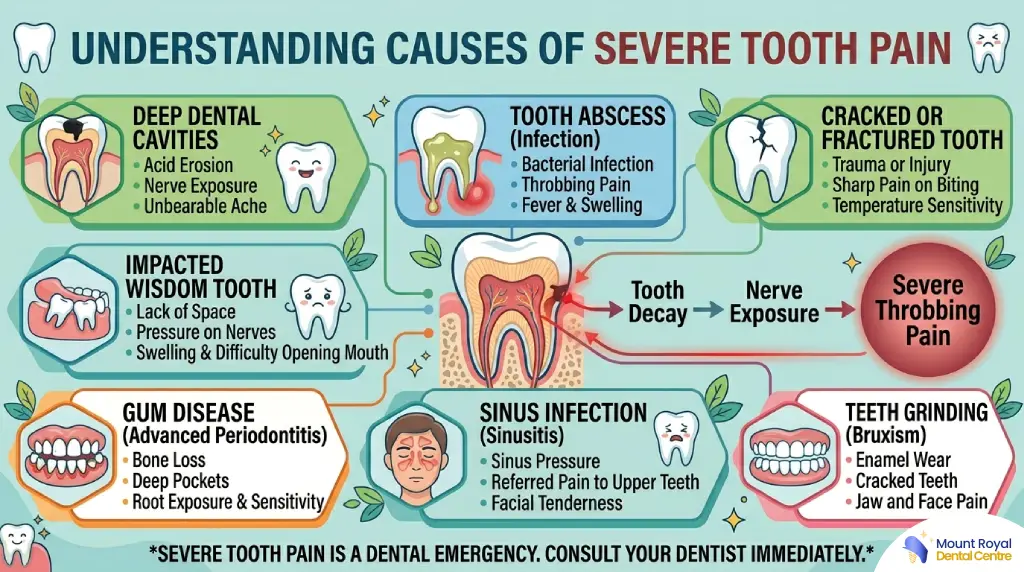
1. Deep Tooth Decay
One of the most common causes of tooth pain is dental decay.
Tooth decay begins when bacteria in the mouth produce acids that gradually damage the tooth. Early decay may not cause noticeable symptoms. As the cavity becomes deeper and reaches the inner layers of the tooth, however, you may begin experiencing sensitivity or pain.
A small cavity may cause discomfort when you consume something cold, hot, sweet, or acidic. If decay progresses toward the pulp, the soft inner portion containing nerves and blood vessels, pain can become much more intense.
Deep decay may eventually cause spontaneous pain, meaning your tooth hurts even when you are not eating or drinking. At this stage, delaying treatment can allow the problem to progress further.
Depending on the severity of the decay, treatment may involve a filling, a crown, root canal treatment, or extraction when the tooth cannot be restored.
2. Dental Abscess
A dental abscess is an infection that can develop around the root of a tooth or in the surrounding tissues.
An abscess may cause:
- Severe, throbbing tooth pain
- Swelling around the tooth or gum
- Facial swelling
- Tenderness when biting or chewing
- A bad taste in the mouth
- Pus or drainage
- Fever or feeling generally unwell
An abscess should not be left untreated. Dental infections can sometimes spread into surrounding tissues, particularly when treatment is delayed.
The American Dental Association recommends addressing the underlying dental problem rather than relying on antibiotics alone for most localized dental pain and infections. Depending on the condition, definitive dental treatment may include procedures such as drainage, root canal treatment, or extraction. Antibiotics may be appropriate when there are signs of systemic involvement, such as fever or malaise.
3. An Infected or Inflamed Tooth Nerve
The pulp inside your tooth contains nerves and blood vessels. When deep decay, trauma, or another problem irritates or damages the pulp, it can become inflamed.
This condition can cause intense pain that may feel sharp, throbbing, or lingering.
Some people notice that the pain becomes particularly strong at night or when lying down. Others experience significant sensitivity to hot or cold foods and drinks.
When the pulp is severely inflamed or infected, simply waiting for the pain to disappear is unlikely to solve the underlying problem. A dentist needs to determine whether the tooth can be treated and preserved.
In appropriate cases, root canal treatment can remove the infected or inflamed pulp while allowing the natural tooth to remain in place.
4. A Cracked or Broken Tooth
A cracked tooth can cause sudden or severe pain, especially when chewing.
The pain may not always be constant. You might notice discomfort when biting down or when releasing your bite. Cold sensitivity can also occur.
Cracks can develop because of trauma, biting hard objects, teeth grinding, large fillings, or normal wear over time.
A cracked tooth should be evaluated promptly because some cracks can worsen if the tooth continues to experience pressure. Treatment depends on the location and severity of the crack and may include a filling, crown, root canal treatment, or extraction in more severe cases.
5. Gum Disease
Although tooth pain is often associated with the tooth itself, problems involving the gums can also cause discomfort.
Advanced gum disease can cause:
- Swollen or tender gums
- Bleeding during brushing or flossing
- Persistent bad breath
- Gum recession
- Loose teeth
- Pain when chewing
If gum disease progresses, the tissues and bone supporting your teeth can become damaged.
Prompt dental assessment can help identify the cause of your symptoms and determine whether professional cleaning, periodontal treatment, improved home care, or other treatment is needed.
6. Dental Trauma
A blow to the mouth can damage a tooth even when there is no obvious crack or break.
Dental trauma may cause pain, sensitivity, looseness, bleeding, or changes in the colour of a tooth. In some cases, an injury can damage the pulp inside the tooth.
If you have experienced an accident or injury involving your teeth, contact a dentist promptly for an evaluation.
A knocked-out permanent tooth is particularly time-sensitive. The American Dental Association identifies dental trauma, including avulsion and luxation, among conditions requiring urgent attention.
Don’t Let Severe Tooth Pain Get Worse
Severe or persistent tooth pain may be a sign of an underlying dental problem. Contact Mount Royal Dental Centre today for prompt assessment and appropriate treatment to help restore your comfort and oral health.
When Is Tooth Pain an Emergency?
Not every toothache requires a trip to a hospital emergency department, but severe dental symptoms should not be ignored.
You should seek urgent dental care if you experience:
Severe or Persistent Pain
If your tooth pain is intense, continues for hours, keeps returning, or interferes with eating or sleeping, contact a dentist.
Pain that does not go away on its own can indicate a problem that requires treatment.
The ADA’s current guidance emphasizes that pain medication can provide temporary relief when definitive dental care is not immediately available, but it is not a replacement for treatment of the underlying dental condition.
Facial or Jaw Swelling
Swelling around a painful tooth can indicate an infection.
Swelling may initially be limited to the gum but can sometimes extend into the cheek, jaw, or face. Increasing swelling warrants prompt professional evaluation.
Fever or Feeling Unwell
A fever, chills, unusual fatigue, or feeling generally unwell alongside dental pain may indicate that an infection is becoming more extensive.
The ADA’s antibiotic guidance specifically identifies systemic involvement, including fever or malaise, as a reason the treatment approach may need to include antibiotics alongside definitive dental care.
Pus or a Bad Taste
If you notice pus around a tooth, drainage, or a persistent unpleasant taste in your mouth, an infection may be present.
Even if the pain temporarily decreases after drainage, you should still see a dentist. A reduction in pain does not necessarily mean that the underlying infection has been resolved.
Difficulty Opening Your Mouth
Difficulty opening your mouth normally, especially when accompanied by swelling or significant pain, should be assessed promptly.
A Broken or Knocked-Out Tooth
A broken tooth that causes significant pain should be evaluated quickly.
If a permanent tooth has been knocked out, seek dental care immediately. The sooner the tooth is assessed and managed, the better the chance of an appropriate outcome.
Uncontrolled Bleeding
Bleeding that does not stop with appropriate first-aid measures requires urgent professional attention. The ADA considers uncontrolled bleeding a dental emergency.
When Should You Go to a Hospital Emergency Department?
Some dental problems can be treated by an emergency dentist, while certain symptoms require emergency medical care.
If dental pain or swelling is accompanied by difficulty breathing, difficulty swallowing, rapidly increasing facial or neck swelling, or signs that the airway may be affected, seek emergency medical attention immediately.
A serious dental infection can sometimes spread into deeper tissues. Airway compromise is a medical emergency and should not be managed by waiting for a routine dental appointment.
The ADA identifies diffuse soft-tissue infection with swelling that may compromise the airway as a potentially life-threatening dental emergency.
Can You Wait Until Your Regular Dental Appointment?
It depends on the symptoms.
If you have mild, occasional sensitivity that occurs only briefly after consuming something cold or sweet and disappears quickly, you may be able to discuss it during your next scheduled dental visit.
However, severe or worsening pain should not be treated as something you simply have to tolerate until your next routine appointment.
Contact your dental office and explain your symptoms. A dental professional can help determine how quickly you need to be seen.
Mount Royal Dental Centre’s emergency dentistry guidance notes that severe tooth pain, facial swelling, dental abscesses, significant discomfort from a broken or knocked-out tooth, and certain other problems may require emergency dental care. The practice also aims to provide same-day emergency appointments whenever possible.
What Can You Do While Waiting to See a Dentist?
If you cannot see a dentist immediately, there are a few steps that may help you manage your symptoms temporarily.
Keep the Area Clean
Continue gently brushing your teeth and cleaning around the affected area.
Avoid aggressive brushing directly over severely painful or swollen tissues, but do not completely stop cleaning your mouth.
Rinse With Warm Salt Water
A gentle warm salt-water rinse may help keep the mouth clean and can provide temporary comfort.
Do not use extremely hot water, as this can irritate oral tissues or cause burns.
Avoid Foods That Trigger the Pain
If hot, cold, sweet, acidic, or hard foods make your pain worse, avoid them until you can receive dental care.
Choose softer foods and chew on the opposite side of your mouth if necessary.
Consider Over-the-Counter Pain Relief
For adults and adolescents who cannot receive definitive dental treatment immediately, evidence-based guidance supports non-opioid pain relievers as first-line options for temporary management of acute dental pain. NSAIDs such as ibuprofen, alone or in combination with acetaminophen, may be effective for many people.
Always follow the medication label and consider your own medical history, allergies, current medications, pregnancy status, and other health considerations. If you are unsure whether a medication is appropriate for you, speak with a pharmacist or healthcare professional.
Pain medication should be considered a temporary measure, not a substitute for dental treatment.
What You Should NOT Do for Severe Tooth Pain
When tooth pain becomes severe, people sometimes try home remedies that can cause additional problems.
Do Not Put Aspirin Directly on Your Tooth or Gums
Placing medication directly against the gum can irritate or damage the soft tissues.
Pain medication should be taken only as directed.
Do Not Ignore Swelling
A swollen cheek or gum around a painful tooth can be a sign of infection.
Do not wait several days hoping that swelling will disappear without treatment.
Do Not Rely on Leftover Antibiotics
Antibiotics are not appropriate for every type of toothache. The ADA recommends against antibiotics for most pulpal and periapical dental conditions when appropriate dental treatment is available.
Taking leftover medication can delay appropriate treatment and may not address the source of the problem.
Do Not Try to Drain an Abscess Yourself
An abscess should be evaluated and treated by a dental professional.
Trying to puncture, squeeze, or drain an infection yourself can cause additional tissue damage and does not eliminate the underlying cause.
Do Not Wait for Severe Pain to “Go Away”
Dental pain can sometimes fluctuate. A temporary improvement does not necessarily mean the tooth has healed.
For example, a severely damaged pulp may eventually lose its ability to respond normally to stimuli. That does not mean the underlying problem has disappeared.
What Will the Dentist Do for Severe Tooth Pain?
When you visit a dentist with severe tooth pain, the first step is determining what is causing the problem.
Your dentist may:
- Ask about when the pain started.
- Ask what makes the pain better or worse.
- Examine your teeth and gums.
- Check how individual teeth respond to different stimuli.
- Look for swelling, cracks, decay, or signs of infection.
- Take dental X-rays when appropriate.
- Discuss treatment options based on the findings.
The goal is not simply to stop the pain temporarily. The goal is to identify and treat its underlying cause.
Depending on the diagnosis, treatment may include:
- Dental fillings
- Professional cleaning or periodontal treatment
- A dental crown
- Root canal treatment
- Drainage of an abscess
- Tooth extraction
- Treatment of a cracked or fractured tooth
- Emergency treatment following dental trauma
The appropriate treatment depends on the condition of your tooth, the extent of the infection or damage, your overall oral health, and whether the tooth can be restored.
Does Severe Tooth Pain Always Mean You Need a Root Canal?
No.
Severe tooth pain does not automatically mean that you need a root canal.
A toothache can have many causes, including decay, gum problems, a cracked tooth, trauma, sensitivity, or an infection.
Root canal treatment may be recommended when the pulp inside the tooth has become irreversibly inflamed or infected and the tooth can still be successfully restored.
Your dentist can determine whether root canal treatment is appropriate after examining the tooth and, when necessary, taking X-rays or performing additional diagnostic tests.
When a natural tooth can be treated successfully, preserving it may be preferable to extracting it. However, every case is different.
Can a Toothache Go Away on Its Own?
Sometimes tooth sensitivity or minor irritation can improve, but you should not assume that significant tooth pain will resolve permanently without treatment.
A toothache caused by decay, infection, a cracked tooth, or pulp damage generally requires professional evaluation.
If the pain suddenly stops after being severe, that does not necessarily mean the tooth has recovered. In some circumstances, the nerve inside a severely damaged tooth may stop functioning, while infection or other disease remains.
This is one reason it is important to address the cause rather than simply monitoring the pain.
Why Early Treatment Matters
One of the biggest mistakes people make with dental pain is waiting until it becomes unbearable.
A problem that is relatively straightforward to treat in its early stages can become more complicated if it progresses.
For example, a cavity may initially require a relatively simple restoration. If decay reaches the pulp, treatment may become more extensive. If an infection develops and spreads around the root, additional treatment may be required.
Early dental care can help:
- Identify the cause of pain
- Prevent the problem from becoming more extensive
- Protect surrounding teeth and tissues
- Reduce the risk of infection
- Improve the chances of preserving the natural tooth
- Restore comfortable chewing and normal function
Prompt treatment is particularly important when symptoms are severe or accompanied by swelling or systemic symptoms.
How to Reduce Your Risk of Severe Tooth Pain
The best dental emergency is often the one that can be prevented.
Regular preventive dental care can help identify problems before they become painful.
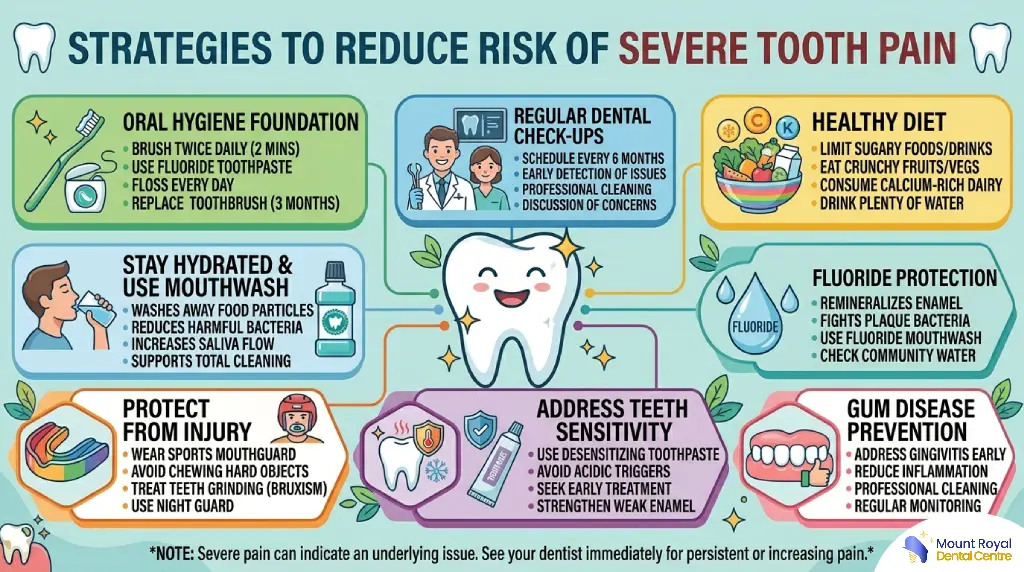
Brush Twice a Day
Brush your teeth twice daily using fluoride toothpaste unless your dentist recommends otherwise.
Pay attention to the gumline and all tooth surfaces.
Clean Between Your Teeth
Brushing alone cannot effectively clean every area between the teeth.
Use dental floss or another interdental cleaning method recommended by your dental professional.
Limit Frequent Sugary Foods and Drinks
Frequent exposure to sugars can contribute to tooth decay.
Try to reduce how often you consume sugary snacks and drinks, especially between meals.
Protect Your Teeth During Sports
If you participate in contact sports or activities where dental injuries are possible, ask your dentist about an appropriate mouthguard.
Avoid Using Your Teeth as Tools
Do not use your teeth to open packages, cut objects, or bite extremely hard items.
These habits can increase the risk of chipped and cracked teeth.
Attend Regular Dental Checkups
Routine examinations allow your dentist to identify cavities, gum problems, damaged restorations, and other issues before they become severe.
Preventive care is an important part of maintaining your oral health and avoiding unexpected dental emergencies.
Frequently Asked Questions
Is severe tooth pain an emergency?
How quickly should I see a dentist for severe tooth pain?
Can I treat severe tooth pain at home?
Should I take antibiotics for a toothache?
What if my tooth pain stops suddenly?
What if my face is swollen?
Can a cracked tooth cause severe pain?
Don’t Wait Until Tooth Pain Becomes Unbearable
Severe tooth pain is your body’s way of telling you that something may be wrong. While temporary measures can help you get through the hours before an appointment, they should not replace professional dental care.
If your tooth pain is severe, persistent, or accompanied by swelling, fever, an abscess, a broken tooth, or dental trauma, contact a dentist promptly. And if swelling affects your ability to breathe or swallow, seek emergency medical care immediately.
At Mount Royal Dental Centre, we understand that dental emergencies can happen unexpectedly. Our team can assess your symptoms, identify the underlying problem, and discuss appropriate treatment options to help get your oral health back on track.
Table of Contents
