
Why Do My Gums Bleed When I Brush or Floss? Causes, Treatment & Prevention
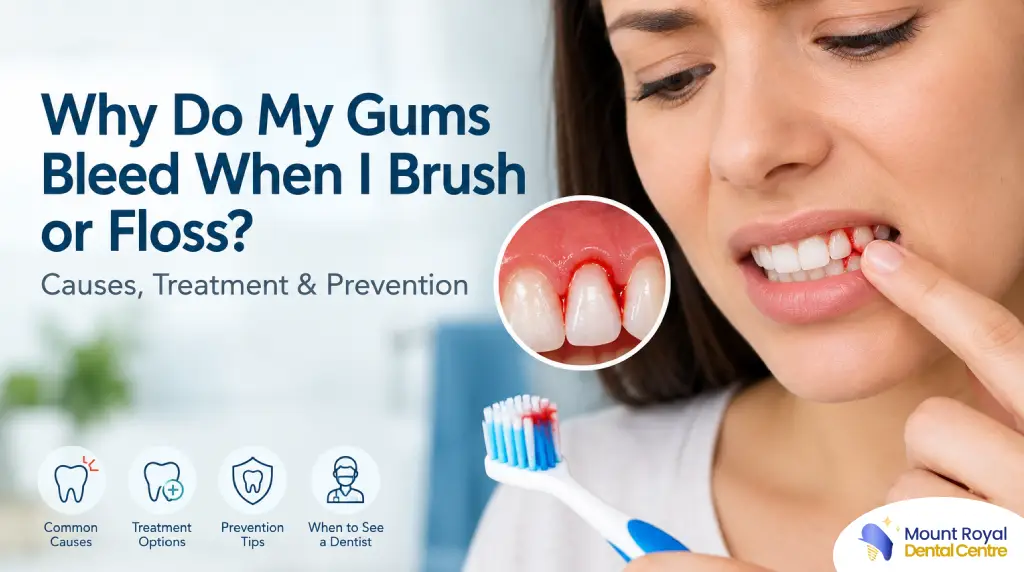
Have you ever noticed blood in the sink after brushing your teeth or seen a little blood on your floss? Bleeding gums are common, but that does not mean they should be considered normal.
In many cases, gums that bleed when you brush or floss are responding to plaque buildup and inflammation. This can be an early sign of gingivitis, the mildest form of gum disease. If the underlying cause is not addressed, gum inflammation can sometimes progress to more serious periodontal disease, which can affect the tissues and bone supporting your teeth.
Other factors can also cause or contribute to bleeding gums, including brushing too aggressively, using an improper flossing technique, hormonal changes, certain medications, ill-fitting dental appliances, or other health conditions.
The good news is that many causes of bleeding gums can be managed with consistent oral hygiene and professional dental care.
In this guide, we will explain why your gums may bleed when brushing or flossing, what you can do at home, when bleeding gums require professional attention, and how regular dental visits can help protect your gums and teeth.
Is It Normal for Your Gums to Bleed When You Brush or Floss?
Occasional bleeding does not necessarily mean you have a serious dental problem, but recurring bleeding should not be ignored.
Healthy gums generally should not bleed simply because you brush your teeth or clean between them. If your gums consistently bleed during your oral hygiene routine, it is worth looking at why.
One of the most common reasons is plaque.
Plaque is a sticky film of bacteria that continuously forms on your teeth. When plaque is not removed effectively, it can collect along the gumline and cause irritation and inflammation. The gums may become red, swollen, tender, and more likely to bleed when touched by a toothbrush or floss.
This early stage of gum inflammation is known as gingivitis.
The good news is that gingivitis can often be improved with better daily oral hygiene and professional dental care. However, leaving gum inflammation untreated can allow the condition to become more serious.
If your gums bleed regularly, especially if you also notice swelling, persistent bad breath, gum tenderness, or changes in how your teeth fit together, consider scheduling a dental examination.
Why Do My Gums Bleed When I Brush?
There are several possible reasons your gums may bleed during brushing.
1. Plaque buildup along the gumline
Plaque is one of the most common causes of bleeding gums.
Even if you brush every day, plaque can remain in areas that are difficult to reach, particularly around the gumline and between the teeth.
As bacteria accumulate, your gums may become inflamed. Inflamed gum tissue is more sensitive and can bleed when your toothbrush comes into contact with it.
Regular brushing and cleaning between your teeth are important for controlling plaque. However, once plaque hardens into tartar, brushing alone cannot remove it effectively.
That is where a professional dental cleaning can help.
Mount Royal Dental Centre provides routine dental examinations, professional cleanings, and preventive care to help patients maintain their oral health.
Learn more about Dental Cleaning and how professional cleaning can complement your daily oral hygiene routine.
2. Gingivitis
Gingivitis is an early form of gum disease caused primarily by plaque accumulation.
Common signs can include:
- Bleeding when brushing or flossing
- Red or darker-looking gums
- Swollen gums
- Tender gums
- Bad breath
- Gums that feel irritated
Some people may have gingivitis without experiencing pain. That is one reason bleeding gums should not simply be dismissed.
When gum inflammation is identified early, improving oral hygiene and receiving appropriate professional care can often help restore healthier gums.
3. Brushing too hard
If you use excessive force when brushing, your gums may become irritated.
Brushing harder does not necessarily mean brushing better. A toothbrush should clean your teeth and gumline effectively without causing unnecessary trauma to the soft tissues.
Try using a soft-bristled toothbrush and gentle, controlled movements.
Instead of scrubbing back and forth aggressively, position the brush around the gumline and use small, gentle motions.
If your gums continue to bleed despite using a gentle technique, the problem may be related to inflammation rather than brushing pressure.
4. You have recently started flossing
If you have not flossed regularly and have recently started, you may notice some bleeding.
This can happen because plaque and bacteria have been accumulating between your teeth and around your gums. Inflamed gum tissue can bleed when you begin cleaning those areas.
However, bleeding should not be used as a reason to stop flossing.
Instead, focus on using proper technique and cleaning between your teeth consistently. If bleeding continues after you have established a regular routine, talk to your dentist or dental hygienist.
5. You are not cleaning between your teeth effectively
A toothbrush cannot effectively clean every surface between your teeth.
Food particles and plaque can remain in these spaces, allowing bacteria to accumulate around the gums.
Floss or another interdental cleaning method recommended by your dental professional can help clean these areas.
When flossing, avoid snapping the floss forcefully into your gums. Gently guide it between your teeth and curve it around each tooth to clean along the gumline.
Why Do My Gums Bleed When I Floss?
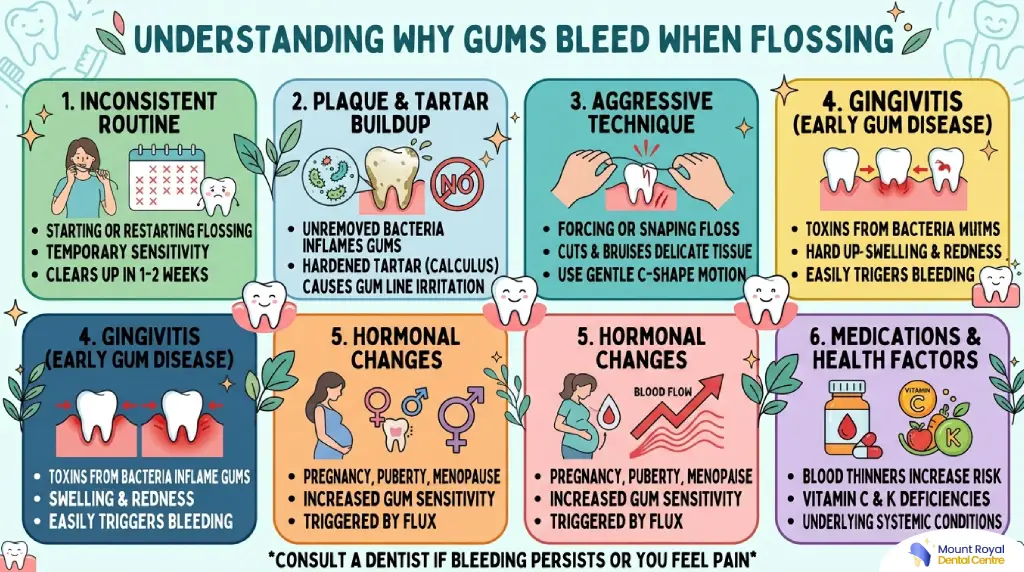
Bleeding while flossing is often associated with inflammation between the teeth.
These areas can be easy to overlook during daily brushing. When plaque remains between the teeth, the surrounding gum tissue can become irritated.
You may notice bleeding particularly around certain teeth.
There are several possible reasons for this:
- Plaque buildup between the teeth
- Gingivitis
- Inconsistent flossing
- Incorrect flossing technique
- Food trapped between teeth
- Crowded teeth that are difficult to clean
- Tartar buildup
- Irritated gum tissue
If you have recently started flossing, some initial bleeding may occur. However, persistent bleeding should be evaluated rather than assumed to be normal.
Consistent interdental cleaning is an important part of maintaining healthy gums.
Can Flossing Make Your Gums Bleed More?
Proper flossing should not damage healthy gums.
If you are flossing aggressively, snapping the floss into the gums, or forcing it between very tight teeth, you may cause irritation.
The goal is to remove plaque, not to force the floss against the tissue.
Try this technique:
- Gently guide the floss between your teeth.
- Curve the floss around one tooth in a C shape.
- Move the floss gently up and down against the side of the tooth.
- Bring the floss slightly below the gumline without forcing it.
- Repeat on the other side of the space.
- Use a clean section of floss as you move between teeth.
If your gums still bleed regularly despite gentle and consistent flossing, schedule a dental examination.
What Does Gum Disease Have to Do With Bleeding Gums?
Bleeding gums can be one of the earliest visible signs of gum disease.
Gum disease generally develops when bacteria and plaque cause inflammation around the gums.
The condition can range from gingivitis, which affects the gums, to periodontitis, a more advanced condition involving the structures that support the teeth.
As gum disease progresses, symptoms may include:
- Persistent gum bleeding
- Swollen or tender gums
- Gums pulling away from the teeth
- Persistent bad breath
- Pus around the gums
- Loose teeth
- Changes in your bite
- Tooth loss in advanced cases
Not everyone with bleeding gums has advanced gum disease. In fact, bleeding may be caused by relatively simple issues such as plaque buildup or brushing technique.
The important point is that persistent bleeding deserves attention so the underlying cause can be identified.
Can Bleeding Gums Be a Sign of Tartar?
Yes.
Plaque that remains on the teeth can harden into tartar, also called dental calculus.
Unlike soft plaque, tartar cannot be completely removed with normal brushing and flossing at home. It may accumulate around the gumline and contribute to irritation and inflammation.
You may notice tartar as a hard, rough deposit on your teeth. It can appear yellow, brown, or darker depending on the location and other factors.
Trying to scrape tartar off yourself is not recommended. Dental professionals have the appropriate instruments and training to remove hardened deposits safely.
Regular professional cleanings can help remove tartar and make it easier to maintain your oral hygiene at home.
Mount Royal Dental Centre recommends regular dental checkups and professional cleanings as part of preventive dental care. The clinic’s FAQ notes that many patients are advised to have a checkup and cleaning approximately every six months, although individual needs can vary.
How Can I Stop My Gums From Bleeding?
The right solution depends on the cause, but several habits can help improve gum health.
Brush twice a day
Brush your teeth twice daily using fluoride toothpaste and a soft-bristled toothbrush unless your dental professional recommends otherwise.
Pay particular attention to the gumline without brushing aggressively.
Clean between your teeth every day
Floss or use another interdental cleaning method recommended by your dental professional.
Cleaning between your teeth removes plaque from areas a toothbrush cannot reach effectively.
Do not stop brushing because your gums bleed
If bleeding is caused by plaque-related inflammation, avoiding brushing can allow even more plaque to accumulate.
Instead, use a gentle technique and continue your regular oral hygiene routine.
If bleeding persists, arrange a dental assessment.
Schedule regular dental cleanings
Even a good home-care routine cannot remove hardened tartar once it has formed.
Professional cleanings can remove deposits that brushing and flossing cannot eliminate.
Avoid tobacco products
Tobacco use can negatively affect oral health and is associated with an increased risk of gum disease.
If you use tobacco and experience persistent gum bleeding, discuss your oral health with your dental professional.
Pay attention to changes
Bleeding gums should not be considered in isolation.
Take note of other changes such as swelling, tenderness, bad breath, receding gums, loose teeth, or persistent discomfort.
These symptoms can help your dentist determine whether further evaluation or treatment is needed.
Can Bleeding Gums Go Away on Their Own?
Sometimes mild bleeding may improve when the underlying cause is addressed.
For example, if bleeding is related to inconsistent flossing and plaque buildup, improving your daily oral hygiene may help reduce inflammation.
However, there is an important difference between occasional bleeding and persistent bleeding.
If your gums continue to bleed despite consistent brushing and flossing, there may be an underlying issue that requires professional attention.
Possible causes include:
- Persistent gingivitis
- Tartar buildup
- Periodontal disease
- Irritation from dental appliances
- Improper brushing or flossing technique
- Certain medications
- Hormonal changes
- Other health conditions
Rather than waiting indefinitely for the bleeding to stop, a dental examination can help determine what is causing it.
When Should I See a Dentist About Bleeding Gums?
You should consider seeing a dentist if your gums bleed frequently or if the bleeding is accompanied by other symptoms.
Make an appointment if you experience:
- Bleeding gums that continue for several weeks
- Swollen or red gums
- Gum tenderness
- Persistent bad breath
- Receding gums
- Pus around the gums
- Loose or shifting teeth
- Pain when chewing
- Increased tooth sensitivity
- Changes in your bite
A dentist can examine your teeth and gums, assess plaque and tartar buildup, and determine whether gum disease or another issue may be contributing to the bleeding.
Early evaluation can be particularly helpful because many dental problems are easier to manage when identified before they become more advanced.
What Will the Dentist Do for Bleeding Gums?
Your dental visit will depend on your symptoms and oral health.
Your dentist may examine:
- Your gums
- Teeth
- Gumline
- Areas between the teeth
- Existing dental restorations
- Signs of plaque or tartar
- Signs of gum recession
- Tooth mobility
They may also measure the spaces around your teeth or recommend dental X-rays when appropriate.
If plaque or tartar buildup is contributing to the problem, a professional cleaning may be recommended.
If there are signs of gum disease, your dental team can discuss appropriate treatment and ongoing maintenance.
The goal is not simply to stop the bleeding. It is to identify and address the reason your gums are bleeding in the first place.
What Is the Difference Between Gingivitis and Periodontitis?
Understanding the difference can help explain why persistent bleeding should not be ignored.
Gingivitis
Gingivitis is inflammation of the gums. It is commonly associated with plaque buildup.
Symptoms may include:
- Bleeding gums
- Red or swollen gums
- Tenderness
- Bad breath
At this stage, the supporting structures around the teeth are generally not permanently damaged.
Improving oral hygiene and receiving professional care can help manage gingivitis.
Periodontitis
Periodontitis is a more advanced form of gum disease.
The inflammation and infection can affect the tissues and bone supporting the teeth.
Possible signs include:
- Persistent gum bleeding
- Gum recession
- Deep spaces around teeth
- Loose teeth
- Changes in tooth position
- Persistent bad breath
- Tooth loss in advanced cases
Not every case of bleeding gums means periodontitis is present. A dental examination is necessary to determine the condition of your gums.
Can Hormonal Changes Cause Bleeding Gums?
Hormonal changes can make some people more sensitive to plaque and gum inflammation.
Changes associated with puberty, pregnancy, menstruation, or other hormonal fluctuations may affect the gums.
Some people may notice that their gums become more swollen, tender, or likely to bleed during certain periods.
This does not mean plaque is irrelevant. Maintaining good oral hygiene remains important because hormonal changes can increase the gums’ response to irritation.
If you notice recurring gum changes associated with hormonal fluctuations, mention them during your dental appointment.
Can Medications Cause Bleeding Gums?
Some medications can affect oral health or bleeding.
Certain medications may contribute to dry mouth, gum changes, or increased bleeding tendency. If you have recently started a medication and notice a significant change in your gums, tell your dentist and healthcare provider.
Do not stop taking a prescribed medication simply because you notice bleeding gums.
Instead, discuss the symptom with the healthcare professional who prescribed the medication and your dental team.
Are Bleeding Gums Ever a Dental Emergency?
Most cases of bleeding while brushing or flossing are not emergencies.
However, uncontrolled bleeding, significant facial swelling, severe dental pain, or other serious symptoms can require urgent dental evaluation.
Mount Royal Dental Centre’s emergency dentistry guidance identifies uncontrolled bleeding, facial swelling, dental abscesses, and severe dental pain among situations that may require prompt attention.
If bleeding is heavy, does not stop, or occurs alongside significant swelling or other concerning symptoms, contact a dental professional promptly.
If you have severe bleeding associated with a serious injury or another potentially life-threatening medical problem, seek emergency medical care.
How to Prevent Bleeding Gums
The best way to prevent bleeding gums is to make gum health part of your everyday oral hygiene routine.
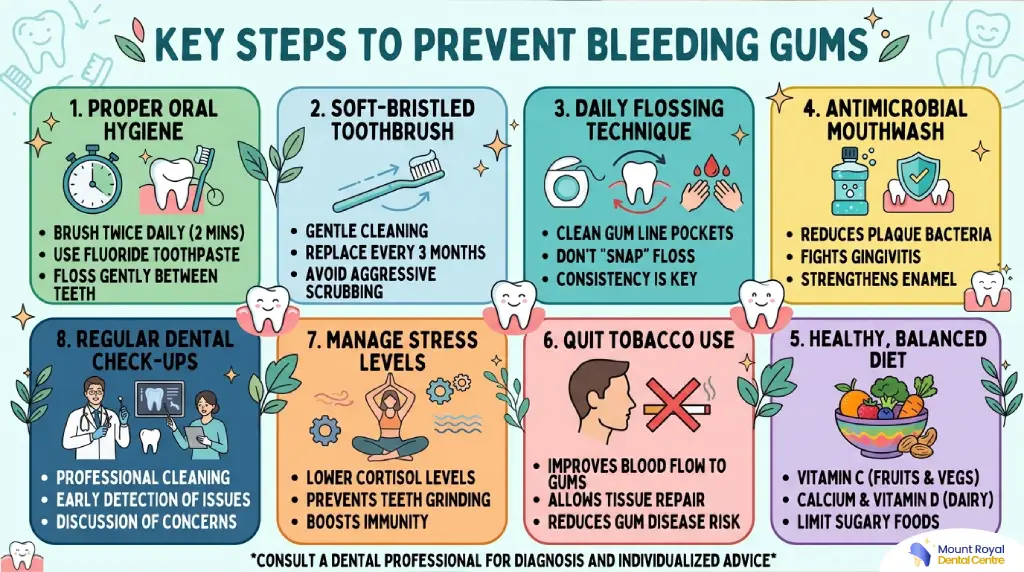
1. Brush twice a day
Use a soft-bristled toothbrush and fluoride toothpaste.
Spend enough time cleaning all surfaces of your teeth, including the areas near the gumline.
2. Floss or clean between your teeth daily
Plaque between your teeth can contribute to gum inflammation.
Choose floss, interdental brushes, or another method recommended by your dental professional.
3. Avoid aggressive brushing
More pressure does not mean better cleaning.
Gentle and consistent brushing is generally preferable to aggressive scrubbing.
4. Keep regular dental appointments
Professional examinations allow your dental team to monitor your gums and teeth and identify changes early.
Professional cleanings can also remove tartar that cannot be removed effectively at home.
5. Maintain a balanced oral-health routine
Your oral health is influenced by more than brushing alone.
Limit frequent sugary foods and drinks, avoid tobacco products, stay hydrated, and follow the recommendations provided by your dental team.
6. Do not ignore changes
If your gums suddenly become swollen, painful, or prone to bleeding, do not simply wait for the problem to disappear.
An early dental assessment can help identify the cause.
Bleeding Gums and Your Overall Dental Health
Your gums are an important part of your oral health.
They surround and protect the structures supporting your teeth, so changes in the gums can sometimes provide an early indication that something needs attention.
Bleeding when brushing or flossing is therefore worth paying attention to, even if you are not experiencing pain.
Many people assume that a dental problem must hurt before they need to see a dentist. That is not always the case.
Some oral health problems can develop with few noticeable symptoms in the early stages. Regular dental examinations can help identify these problems before they become more difficult to manage.
If you are overdue for a checkup or professional cleaning, consider scheduling an appointment rather than waiting for symptoms to worsen.
You can also explore Mount Royal Dental Centre’s Preventive Dental Care services to learn more about maintaining healthy teeth and gums.
Frequently Asked Questions About Bleeding Gums
Why do my gums bleed every time I brush?
Should I stop flossing if my gums bleed?
How long does it take for bleeding gums to improve?
Can a dental cleaning stop bleeding gums?
Are bleeding gums always a sign of gum disease?
Can vitamin deficiencies cause bleeding gums?
When should bleeding gums be considered an emergency?
The Bottom Line: Don’t Ignore Bleeding Gums
If your gums bleed when you brush or floss, you do not necessarily need to worry, but you should pay attention.
The most common cause is inflammation associated with plaque buildup, particularly gingivitis. Brushing too hard, incorrect flossing, hormonal changes, certain medications, and other factors can also contribute.
Start with the basics: brush gently twice a day, clean between your teeth every day, and maintain regular professional dental visits.
If your gums continue to bleed despite good oral hygiene, or if you notice swelling, tenderness, gum recession, bad breath, loose teeth, or other changes, schedule a dental examination.
At Mount Royal Dental Centre, our dental team provides comprehensive preventive and general dental care for patients in Calgary’s Beltline and surrounding communities. The clinic is open seven days a week and offers routine examinations, professional cleanings, and same-day appointments when available.
If you are concerned about bleeding gums, contact Mount Royal Dental Centre to arrange an assessment and find out what may be causing the problem.
Healthy gums should not be an afterthought. Taking action when you first notice changes can help protect your teeth and support your long-term oral health.
Table of Contents
